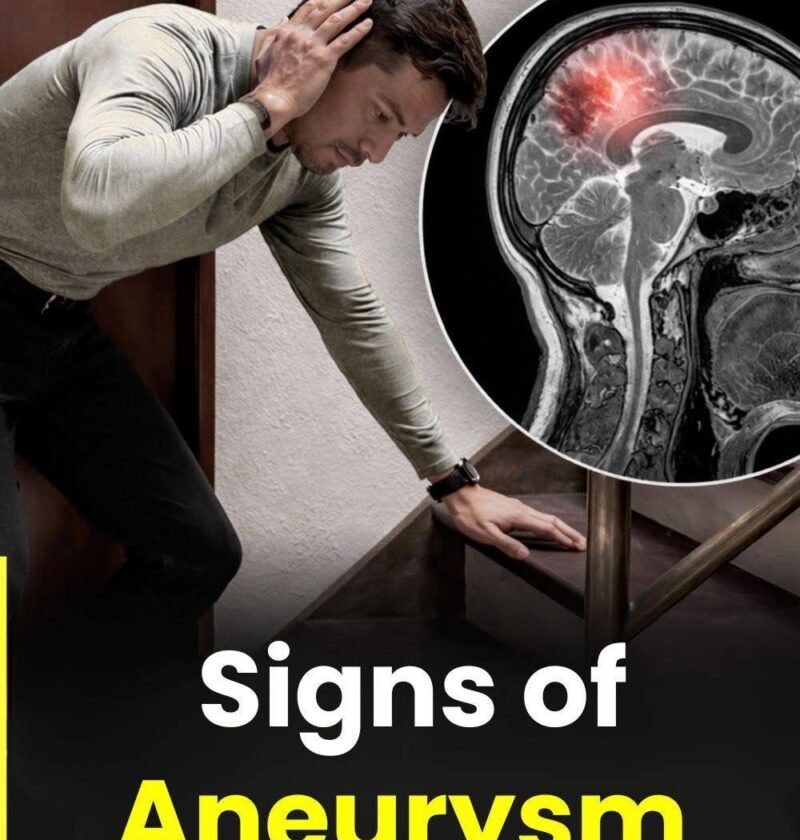
Recognizing the warning signs of an aneurysm is vital, as these weakened, bulging blood vessel walls can be life-threatening if they rupture. While aneurysms can occur in anyone, certain types—such as abdominal aortic aneurysms (AAAs)—are notably more common in men, particularly those over the age of 50 or with a history of smoking and high blood pressure.
Because aneurysms often develop silently until they expand or leak, knowing what red flags to watch for can save a life. Here are the key warning signs of an aneurysm that men should never ignore:
1. A Sudden, Severe “Thunderclap” Headache
-
What it looks like: A blinding, excruciating headache that hits with absolute suddenness—often described as the “worst headache of your life.”
-
Why it happens: This is the hallmark warning sign of a cerebral (brain) aneurysm that is leaking or on the verge of rupturing. It is a medical emergency that requires immediate 911 calls.
2. Deep, Persistent Pain in the Abdomen or Lower Back
-
What it looks like: A constant, throbbing, or aching pain deep in the belly or radiating around to the lower back and flanks. Some men describe it as feeling like a deep pulse in the stomach.
-
Why it happens: This can indicate an abdominal aortic aneurysm (AAA). As the main blood vessel supplying blood to the body swells and puts pressure on surrounding nerves or tissues, it signals that the wall is stretching dangerously thin.
3. Sharp, Tearing Pain in the Chest or Upper Back
-
What it looks like: A sudden, severe sharp or tearing pain felt in the chest, between the shoulder blades, or running down the back.
-
Why it happens: This is a red flag for a thoracic aortic aneurysm or an aortic dissection (a tear in the inner layer of the aorta). It can easily be mistaken for a heart attack, making rapid professional evaluation crucial.
4. Vision Changes or Drooping Eyelids
-
What it looks like: Sudden double vision, blurred vision, loss of peripheral vision, or a drooping eyelid accompanied by a localized pupil dilation.
-
Why it happens: An unruptured brain aneurysm can press against the delicate nerves running to the eyes and face, causing localized neurological symptoms before a catastrophic rupture occurs.
5. Unexplained Dizziness, Confusion, or Difficulty Speaking
-
What it looks like: Sudden bouts of dizziness, trouble balancing, confusion, or a sudden difficulty finding words or articulating speech.
-
Why it happens: Much like a stroke, a cerebral aneurysm affecting blood flow or putting sudden pressure on specific areas of the brain can disrupt normal neurological function.
Emergency Warning:If you or someone you know experiences a sudden “thunderclap” headache, tearing chest/back pain, or unexplained fainting and severe abdominal pain, call emergency services (911) immediately. Do not wait to see if the pain passes.Note for Men at Risk: If you are a man between 65 and 75 and have ever smoked, routine screening via a simple, painless abdominal ultrasound is strongly recommended by doctors to catch AAAs long before they ever become dangerous.
Would you like to discuss risk factors for aneurysms, or tips on how blood pressure management reduces vascular strain?