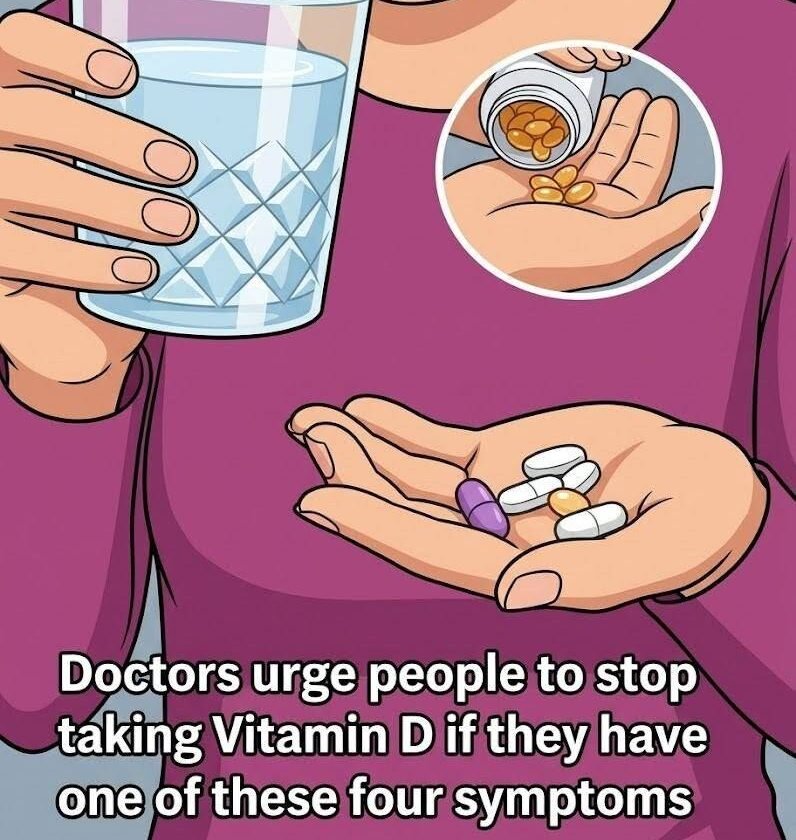
The viral headline **”Stop Taking Vitamin D Immediately If You Have These 4 Symptoms”** refers to the signs of **vitamin D toxicity** (also known as *hypervitaminosis D*).
While vitamin D is essential for bone health and immune function, taking **excessively high doses over extended periods** (typically tens of thousands of IU daily) causes calcium to build up in your bloodstream—a condition called **hypercalcemia**.
—
### The 4 Warning Symptoms
1. **Nausea, Vomiting, and Decreased Appetite**
Excess calcium in the blood affects the digestive tract, leading to persistent stomach upset, loss of appetite, and frequent nausea or vomiting.
2. **Frequent Urination and Excessive Thirst (Polydipsia & Polyuria)**
Hypercalcemia places heavy strain on the kidneys. As the kidneys work overtime to filter excess calcium and excrete it through urine, you experience constant thirst and frequent urination.
3. **Extreme Fatigue, Confusion, or Brain Fog**
Elevated calcium levels disrupt normal nerve transmission in the brain and muscles, causing unexplained exhaustion, muscle weakness, confusion, irritability, or dizziness.
4. **Severe Abdominal, Kidney, or Joint Pain**
Too much calcium in the bloodstream can form kidney stones or accumulate in soft tissues and blood vessels, resulting in sharp flank/back pain, abdominal cramps, or deep joint aching.
—
### Key Context & Safety Guidelines
* **Toxicity requires extreme dosing:** Vitamin D toxicity almost never happens through sunlight exposure or dietary sources alone. It is almost always caused by taking high-dose daily supplements (e.g., 40,000–100,000+ IU per day for several months) without medical supervision.
* **Standard doses are generally safe:** For most adults, the recommended daily allowance (RDA) is **600–800 IU/day**, and the safe Upper Tolerable Intake Limit (UL) set by medical authorities is **4,000 IU/day** unless prescribed higher by a physician to correct a diagnosed deficiency.
* **What to do:** If you are taking high doses of vitamin D and develop these symptoms, stop taking the supplement immediately and consult a physician. A simple blood test measuring 25-hydroxyvitamin D and serum calcium levels can confirm whether levels are dangerously high.