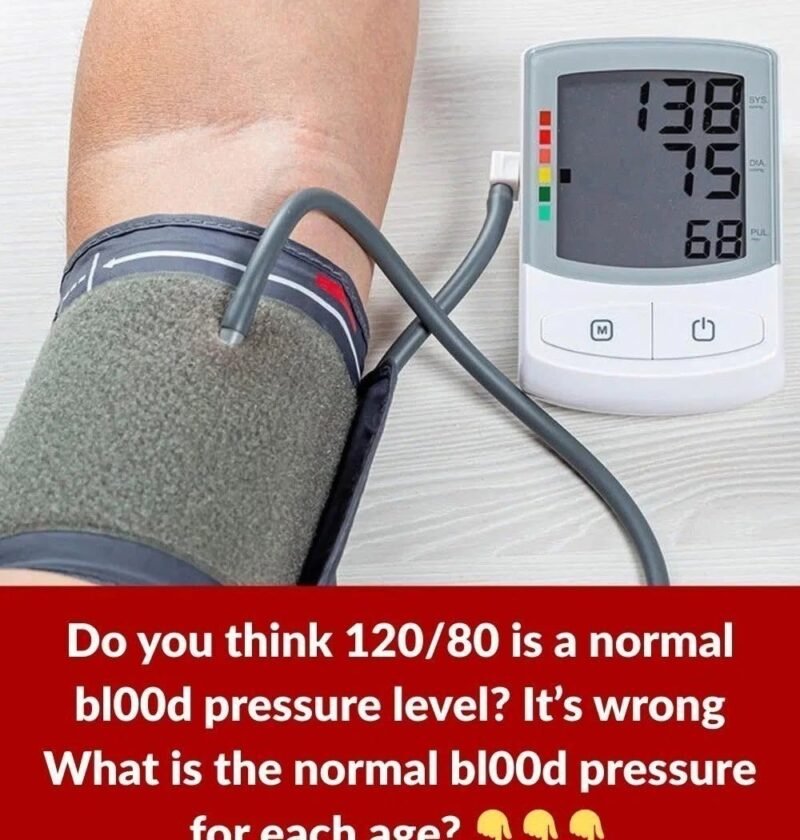
Unlike heart rate, which changes significantly depending on your age group, medical guidelines state that the ideal, normal blood pressure for all adults (ages 18 and older) remains under 120/80 mmHg.
While it is true that average or typical blood pressure tends to creep up as people age (due to the natural stiffening of arteries), “common for your age” does not equal “healthy”.
Adult Blood Pressure Categories (AHA Guidelines)
According to the American Heart Association (AHA) and the American College of Cardiology (ACC), adult blood pressure readings are categorized as follows:
| Category | Systolic (Top Number) | Diastolic (Bottom Number) | |
| Normal | Less than 120 | and | Less than 80 |
| Elevated | 120 – 129 | and | Less than 80 |
| Stage 1 Hypertension | 130 – 139 | or | 80 – 89 |
| Stage 2 Hypertension | 140 or higher | or | 90 or higher |
| Hypertensive Crisis | Higher than 180 | and/or | Higher than 120 |
(Note: If either your top or bottom number falls into a higher category, your reading is classified in that higher category.)
Blood Pressure Expectations Across the Decades
While the official healthy benchmark stays below 120/80 mmHg for everyone, here is how typical population averages shift across different stages of life:
-
Young Adults (18–39 years): Average readings often hover around 110–120 / 70–80 mmHg. Because metabolisms and elasticity in blood vessels are generally high, readings should ideally stay well within the normal range. Catching and addressing early elevation here prevents long-term cardiovascular wear.
-
Middle Age (40–59 years): Averages naturally climb to roughly 120–130+ / 74–82+ mmHg. This is the decade where lifestyle factors, stress, and arterial stiffening begin to push numbers upward. Doctors watch the systolic (top) number closely during these years.
-
Older Adults (60+ years): Population averages often drift into the 130–140 / 70–80+ mmHg range. While seeing a reading like 135/75 in an older adult is very common, it is not considered optimal health. Consistent readings at or above 130/80 still point to hypertension that benefits from management.
What About Children and Teens?
For infants, children, and adolescents, “normal” blood pressure cannot be defined by a single flat number because it depends heavily on age, height, and sex. Pediatric healthcare providers use specialized percentiles based on height-to-age charts to determine if a child’s blood pressure is healthy. Generally, however:
-
Newborns: Much lower (averaging around 60–90 systolic).
-
School-age children & Teens: Gradually increase, typically staying under 120/80 mmHg by late adolescence.
💡 Key Takeaway:Do not assume a rising blood pressure is just a harmless part of aging. If your readings consistently register at 130/80 mmHg or higher, it is worth discussing with a healthcare professional, regardless of how old you are.
Are you checking your blood pressure at home, or looking for ways to keep your numbers in a healthy range?