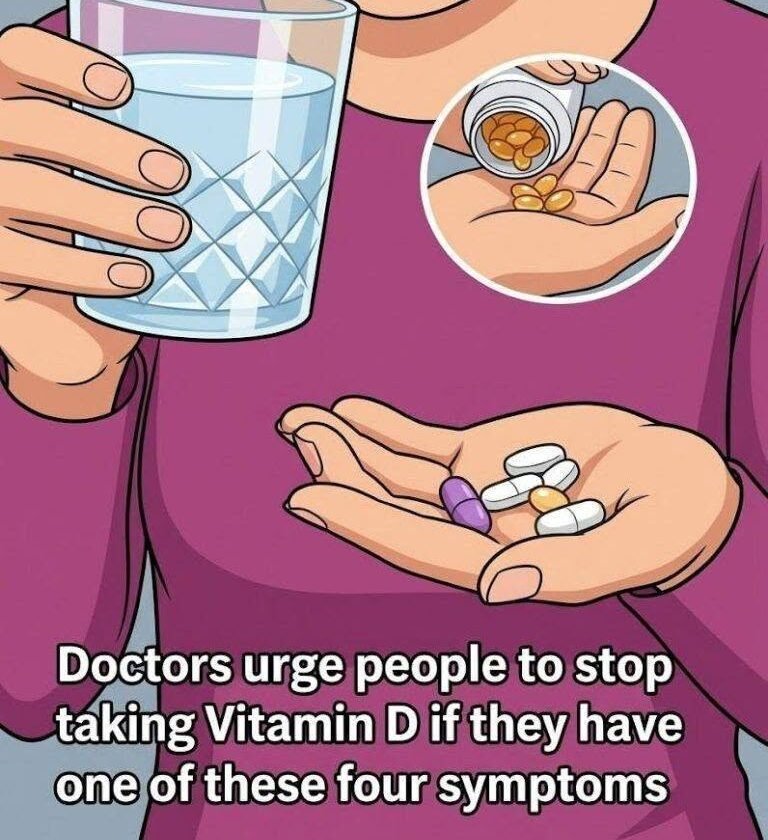
While vitamin D is essential for bone health, immune function, and overall well-being, it is a fat-soluble vitamin, meaning your body stores excess amounts rather than flushing them out in your urine. Taking high-dose supplements over a long period can lead to a condition called hypervitaminosis D, which causes a dangerous buildup of calcium in your bloodstream (hypercalcemia).
Here are 4 key warning signs that you may be taking too much vitamin D:
1. Digestive Distress (Nausea, Vomiting, and Poor Appetite)
The primary mechanism of vitamin D is to help your body absorb calcium from the food you eat. However, when you have an excess of vitamin D, your blood calcium levels skyrocket, which frequently triggers gastrointestinal side effects.
-
What it feels like: Unexplained nausea, frequent bouts of vomiting, stomach pain, or a sudden, unexplained loss of appetite that can lead to unintended weight loss.
2. Excessive Thirst and Frequent Urination
Because your kidneys have to work overtime to filter out the massive surge of calcium circulating in your blood, your body tries to flush it away by producing more urine.
-
What it feels like: Running to the bathroom much more frequently than usual (polyuria) coupled with an unquenchable, constant thirst (polydipsia). If your water intake skyrockets but you still feel dehydrated, it is a classic warning sign of hypercalcemia.
3. Muscle Weakness, Bone Pain, and Fatigue
Ironically, while vitamin D is meant to strengthen bones and muscles, toxicity can cause the exact opposite effect. High calcium levels in the blood can disrupt normal cellular function and muscle contraction, and calcium can even begin depositing improperly into soft tissues and bones.
-
What it feels like: Waking up exhausted despite getting a full night’s rest, feeling sluggish, experiencing persistent muscle weakness, or dealing with deep bone and muscle aches.
4. Brain Fog, Confusion, and Mood Changes
High levels of calcium in the blood don’t just affect your body physically—they also impact your central nervous system.
-
What it feels like: Unaccustomed mental confusion, trouble concentrating, dizziness, apathy, or sudden shifts in mood like irritability and depression. In severe cases, extreme toxicity can even lead to disorientation.
⚠️ Important Note on Safety and Testing:Vitamin D toxicity almost always stems from high-dose supplementation, not from diet or normal sun exposure. If you suspect you are taking too much, stop taking the supplement and consult a healthcare professional. A simple 25-hydroxyvitamin D blood test alongside a calcium panel can easily check your levels and help you find a safe, balanced dosage.
Are you taking a high-dose supplement currently, or experiencing any specific symptoms that made you wonder about your levels?