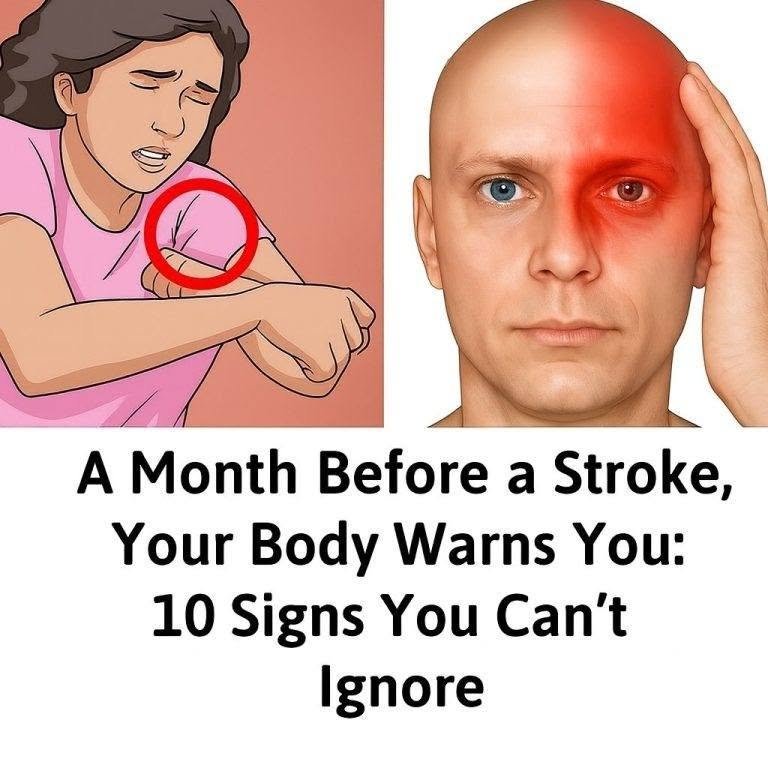
While major strokes typically strike suddenly, clinical research indicates that a significant number of patients experience subtle neurological warning signs or Transient Ischemic Attacks (TIAs)—often referred to as “mini-strokes”—in the days or weeks leading up to a major event.
Recognizing these precursory signals can provide a crucial window for medical intervention.
Understanding the Precursors (TIAs)
A TIA happens when blood flow to a part of the brain is temporarily blocked. Because the blockage resolves on its own, symptoms typically last only a few minutes to an hour and leave no permanent damage. However, a TIA is a major medical warning sign: up to a third of people who experience a mini-stroke go on to have a full-scale stroke, frequently within weeks or months.
10 Subtle and Direct Warning Signs to Watch For
-
Transient Numbness or Weakness
-
What it feels like: A sudden, mild loss of strength or a “pins and needles” sensation localized to one side of the body—affecting the face, arm, or leg. You might notice a hand feeling unusually clumsy or an arm drifting downward when raised.
-
-
Fleeting Speech Difficulties
-
What it feels like: Brief episodes of slurred speech, trouble finding everyday words, or difficulty comprehending what others are saying. These episodes may resolve entirely within minutes, leading people to dismiss them.
-
-
Sudden Visual Disturbances
-
What it feels like: Temporary blurring, double vision, or partial loss of sight in one or both eyes. This is caused by a temporary disruption of blood flow to the brain’s visual cortex or optic pathways.
-
-
Unexplained Dizziness and Balance Issues
-
What it feels like: Sudden bouts of vertigo, a feeling of being unsteadied on your feet, or a sudden lack of coordination that makes walking in a straight line difficult.
-
-
Uncharacteristic, Severe Headaches
-
What it feels like: A sudden, unusually severe headache with no apparent trigger or a recurring, persistent headache pattern that feels distinct from your normal tension headaches or migraines.
-
-
Sudden Cognitive Confusion
-
What it feels like: Brief moments of mental fog, disorientation regarding time or familiar places, or sudden difficulty following a simple conversation or multi-step task.
-
-
Unusual, Deep Fatigue
-
What it feels like: An overwhelming sense of physical exhaustion or lethargy that persists despite getting adequate sleep, reflecting the brain struggling under reduced metabolic efficiency or restricted oxygen flow.
-
-
Subtle Mood or Behavioral Shifts
-
What it feels like: Unexplained spikes in anxiety, irritability, emotional volatility, or sudden apathy. This can occur when localized neurological stress impacts the brain’s emotional regulation centers.
-
-
Short-Term Memory Lapses
-
What it feels like: Noticeable short-term forgetfulness, such as repeatedly misplacing items, forgetting recent conversations, or struggling to recall common words.
-
-
Unexplained Clumsiness or Fine-Motor Drops
-
What it feels like: Frequently dropping objects, struggling to button a shirt, or finding that routine tasks requiring hand-eye coordination suddenly feel uncharacteristically difficult.
-
When to Seek Emergency Help
While the signs above can precede a major stroke by weeks, an active stroke requires immediate emergency intervention. Use the B.E. F.A.S.T. acronym to evaluate acute symptoms:
-
B – Balance: Sudden loss of balance or coordination.
-
E – Eyes: Sudden blurred or lost vision in one or both eyes.
-
F – Face Drooping: Does one side of the face droop, or is it numb?
-
A – Arm Weakness: Is one arm weak or numb? Ask the person to raise both arms; does one drift downward?
-
S – Speech Difficulty: Is speech slurred, are words jumbled, or is the person unable to speak?
-
T – Time to call emergency services: If you observe any of these signs—even if they temporarily go away—call emergency services immediately and note the time symptoms first appeared.
Disclaimer: This information is for educational purposes and should not replace professional medical advice. If you or someone you know experiences sudden neurological symptoms or suspects a mini-stroke, consult a physician or neurologist immediately for diagnostic testing (such as an MRI, CT scan, or carotid ultrasound).