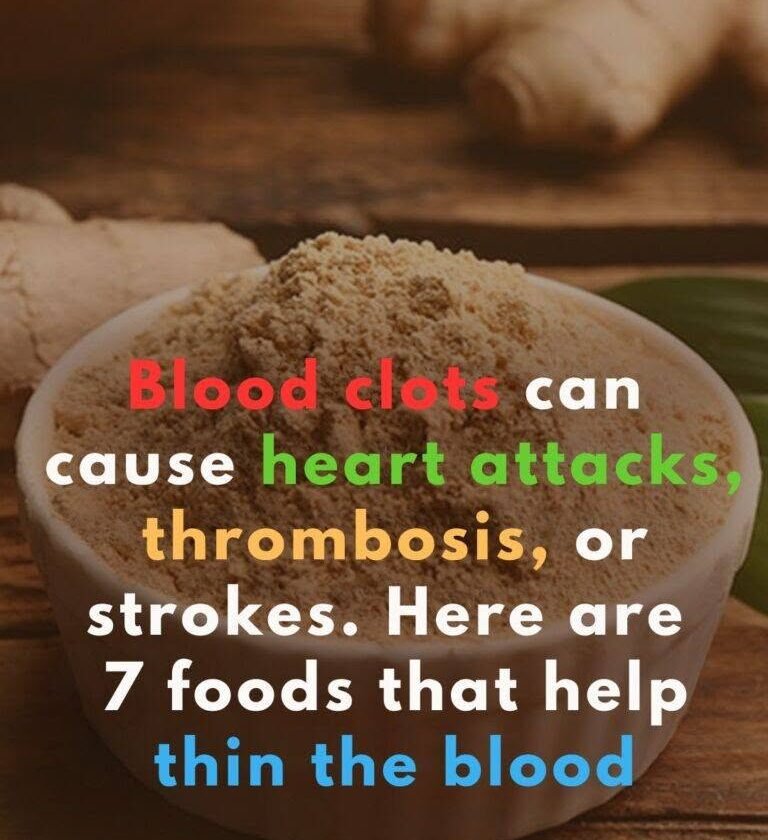
While medical blood thinners (anticoagulants and antiplatelet drugs) are critical for preventing dangerous blood clots under a doctor’s care, certain foods naturally contain compounds that support healthy blood circulation, reduce inflammation, and have mild anticoagulant or antiplatelet properties.
Here are **7 powerful natural blood-thinning foods** you should know about, along with a crucial safety warning:
—
### 1. Garlic
Garlic is one of the most potent natural food-based blood thinners. It contains organosulfur compounds—most notably **ajoene**—which studies suggest have antiplatelet effects, meaning they help prevent blood platelets from clumping together.
* **How to use it:** Raw or lightly cooked garlic delivers the highest concentration of active compounds. Add freshly minced garlic to salad dressings, salsas, or stir-fries.
### 2. Ginger
Ginger contains **salicylate**, a natural chemical that is also found in aspirin (a well-known blood-thinning medication). Salicylates help prevent blood from clotting and reduce inflammation throughout the cardiovascular system.
* **How to use it:** Steep fresh ginger slices in hot water for a soothing tea, or grate fresh root into Asian-inspired dishes, soups, and smoothies.
### 3. Cayenne Pepper
Like ginger, cayenne peppers are exceptionally rich in **salicylates**. They are also packed with capsaicin, which helps lower blood pressure, improves circulation, and keeps blood vessels flexible and clear of blockages.
* **How to use it:** A tiny pinch of cayenne can be added to soups, marinades, or warm lemon water to give your metabolism and circulation a gentle boost.
### 4. Turmeric
Turmeric’s active compound, **curcumin**, is famous for its powerful anti-inflammatory and antioxidant benefits. Research indicates that curcumin also acts as an anticoagulant by inhibiting certain clotting factors in the blood.
* **How to use it:** Mix turmeric into curries, golden milk lattes, or roasted vegetables. *(Tip: Always pair turmeric with a pinch of black pepper, which drastically increases curcumin absorption.)*
### 5. Cinnamon
Cassia cinnamon contains high levels of **coumarin**, a natural organic compound that has strong blood-thinning properties. In fact, synthetic anticoagulant medications like warfarin are derived from coumarin derivatives.
* **How to use it:** Sprinkle Ceylon or Cassia cinnamon over oatmeal, yogurt, or coffee. *(Note: Cassia cinnamon contains higher amounts of coumarin, so consume it in moderation rather than in large medicinal doses).*
### 6. Fatty Fish (Omega-3 Fatty Acids)
Salmon, mackerel, sardines, and trout are loaded with omega-3 fatty acids. Omega-3s help reduce blood viscosity (thickness) and prevent platelets from sticking together, supporting overall cardiovascular health and lowering triglyceride levels.
* **How to use it:** Aim to incorporate fatty fish into your diet two to three times a week, baked, grilled, or poached.
### 7. Vitamin E-Rich Foods (Almonds, Sunflower Seeds, Spinach)
Vitamin E acts as a natural antioxidant and mild antiplatelet agent. Foods like almonds, sunflower seeds, avocados, and spinach help regulate blood clotting and protect blood vessels from oxidative damage.
* **How to use it:** Snack on a handful of raw almonds or sunflower seeds, or toss a handful of fresh spinach into your morning smoothie.
—
> ⚠️ **IMPORTANT MEDICAL WARNING:**
> If you are **already taking prescription blood thinners** (such as Warfarin/Coumadin, Aspirin, Plavix, or Eliquis) or have a bleeding disorder, consuming large, concentrated amounts of these foods can dangerously increase your risk of bleeding or bruising. Always consult your doctor or cardiologist before making major changes to your diet if you take cardiovascular medications.
Are you looking to improve your circulation naturally, or are you curious about how certain foods interact with specific medications?