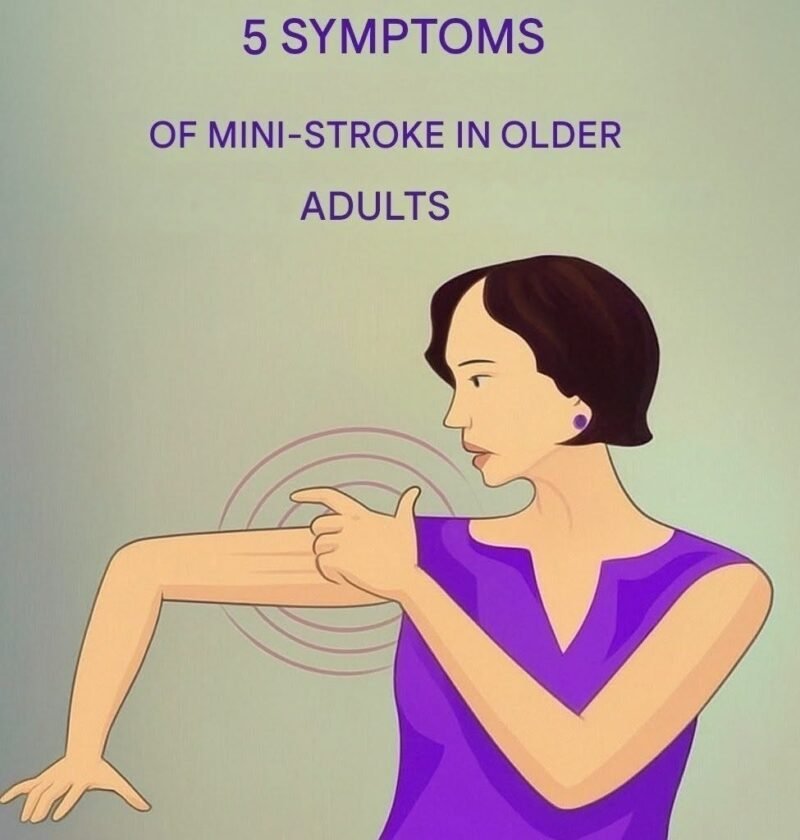
Recognizing the signs of a **mini-stroke** (medically known as a Transient Ischemic Attack or TIA) is critical. While symptoms typically resolve within minutes to 24 hours without permanent damage, a TIA is a **major warning sign** that a full-blown stroke may occur in the near future.
Here are **5 key symptoms** in seniors that should never be ignored:
—
### 1. Sudden Weakness or Numbness (Usually on One Side)
* **What it looks like:** A sudden loss of strength or a “heavy” feeling in the face, arm, or leg. It frequently affects only one side of the body.
* **What to test:** Ask the senior to smile or raise both arms. If one side droops or they cannot keep an arm raised, it is a red flag.
### 2. Sudden Trouble Speaking or Understanding Speech
* **What it looks like:** The senior may suddenly start slurring their words, talking in jumbled sentences, or seeming completely confused when you speak to them. They might struggle to find the right words or understand simple instructions.
### 3. Sudden Vision Changes in One or Both Eyes
* **What it looksLike:** A sudden blurring, darkening, or double vision. They might experience a temporary loss of sight in one eye or feel like a shade is being pulled down over part of their visual field.
### 4. Sudden Loss of Balance, Coordination, or Dizziness
* **What it looks like:** A sudden, unexplained bout of unsteadiness, a feeling of the room spinning (vertigo), or sudden clumsiness. If an older adult has trouble walking or stumbles without a clear cause, it requires immediate attention.
### 5. Sudden, Severe Headache with No Known Cause
* **What it looks like:** A sharp, blinding headache that hits out of nowhere, often described by patients as the “worst headache of their life.” While less common in TIAs than in hemorrhagic strokes, any sudden, intense headache combined with neurological changes is an emergency.
—
> **Important Safety Note:**
> Always remember the **FAST** acronym to spot stroke signs quickly:
> * **F**ace drooping
> * **A**rm weakness
> * **S**peech difficulty
> * **T**ime to call emergency services immediately
>
>
> *Even if the symptoms disappear completely within a few minutes, **never wait to see if they return**. A TIA requires immediate emergency medical evaluation (calling 911 or your local emergency number) to prevent a major stroke.*
—
Would you like tips on how to prepare for a doctor’s visit or discuss general stroke prevention strategies for older adults?