Blog

The “telltale sign” refers to insights popularized by longevity researchers and geneticists—most notably **Dr. David Sinclair** from Harvard Medical School—regarding **fingernail growth rate and physical changes**. Rather than a single mystical indicator of an exact expiration date, doctors look at fingernails as an external dashboard for your internal metabolic speed, cellular regeneration, and systemic health. — ### 1. The Core Indicator: Nail Growth Speed * **What it means:** The rate at which your fingernails grow slows down progressively as you age. Research tracking nail growth over decades indicates that growth velocity drops by roughly 0.5% per year starting around age 30. Over a lifetime, this can add up to a 50% decrease. * **Why it connects to longevity:** Nail growth depends on robust blood circulation, cellular division, and metabolic efficiency. When your body’s regenerative capacity slows down or systemic health deteriorates, your nails grow noticeably slower. Monitoring how frequently you need a trim can serve as a crude personal metric for how well your body is maintaining its cellular turnover. ### 2. Other Critical Nail Signs Doctors Watch For Beyond growth speed, physicians and specialists look at structural and visual changes in the nails that can point to underlying health conditions affecting life expectancy: * **Nail Clubbing:** When the tips of the fingers widen and the nails curve downward around the fingertips, it is known as clubbing. This is often a sign of chronic low oxygen levels in the blood and can be linked to serious underlying **cardiovascular or pulmonary diseases** (such as chronic obstructive pulmonary disease or lung cancer). * **Texture and Brittleness:** Extremely brittle, thin, or peeling nails can reflect poor nutrient absorption, thyroid disorders, or severe iron-deficiency anemia, which impacts overall vitality. * **Color Changes (e.g., Terry’s Nails or Dark Spots):** * *Terry’s nails* (where the nail turns mostly white with a reddish-brown rim) can sometimes signal liver disease, congestive heart failure, or diabetes. * Dark streaks or spots underneath the nail bed can occasionally indicate serious dermatological conditions like subungual melanoma. ### The Takeaway While tracking how fast your nails grow or checking for sudden structural shifts won’t give you a precise date, changes in your nails act as a subtle “check engine” light for your biological age and metabolic health. Are you noticing a sudden change in the growth rate or appearance of your nails, or were you curious about a specific symptom?


The “telltale sign” refers to insights popularized by longevity researchers and geneticists—most notably **Dr. David Sinclair** from Harvard Medical School—regarding **fingernail growth rate and physical changes**.

Rather than a single mystical indicator of an exact expiration date, doctors look at fingernails as an external dashboard for your internal metabolic speed, cellular regeneration, and systemic health.

—

### 1. The Core Indicator: Nail Growth Speed

* **What it means:** The rate at which your fingernails grow slows down progressively as you age. Research tracking nail growth over decades indicates that growth velocity drops by roughly 0.5% per year starting around age 30. Over a lifetime, this can add up to a 50% decrease.
* **Why it connects to longevity:** Nail growth depends on robust blood circulation, cellular division, and metabolic efficiency. When your body’s regenerative capacity slows down or systemic health deteriorates, your nails grow noticeably slower. Monitoring how frequently you need a trim can serve as a crude personal metric for how well your body is maintaining its cellular turnover.

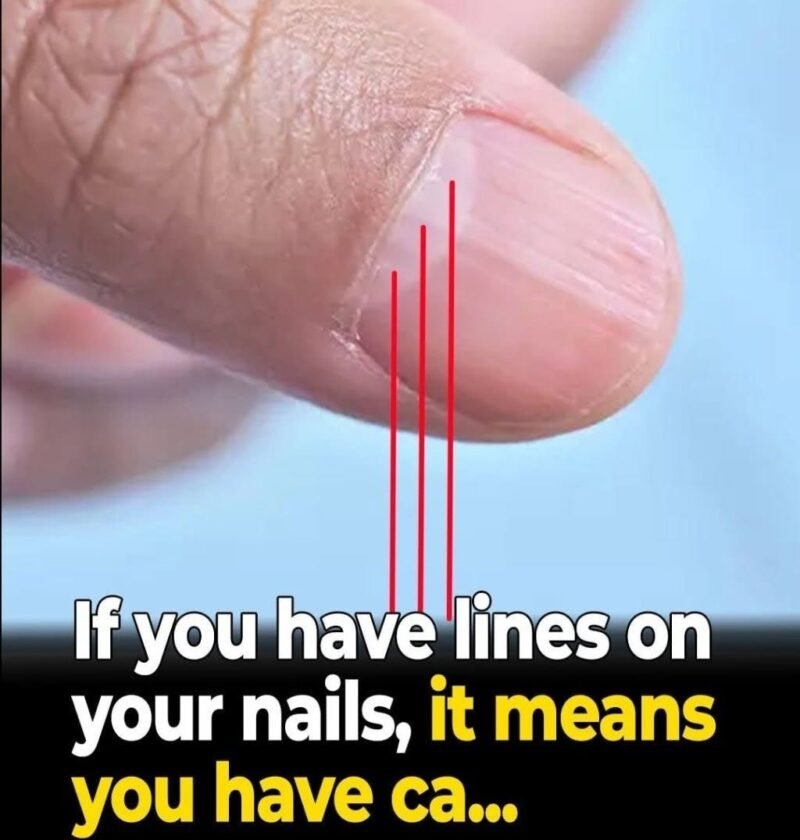
### 2. Other Critical Nail Signs Doctors Watch For

Beyond growth speed, physicians and specialists look at structural and visual changes in the nails that can point to underlying health conditions affecting life expectancy:

* **Nail Clubbing:** When the tips of the fingers widen and the nails curve downward around the fingertips, it is known as clubbing. This is often a sign of chronic low oxygen levels in the blood and can be linked to serious underlying **cardiovascular or pulmonary diseases** (such as chronic obstructive pulmonary disease or lung cancer).
* **Texture and Brittleness:** Extremely brittle, thin, or peeling nails can reflect poor nutrient absorption, thyroid disorders, or severe iron-deficiency anemia, which impacts overall vitality.
* **Color Changes (e.g., Terry’s Nails or Dark Spots):**
* *Terry’s nails* (where the nail turns mostly white with a reddish-brown rim) can sometimes signal liver disease, congestive heart failure, or diabetes.
* Dark streaks or spots underneath the nail bed can occasionally indicate serious dermatological conditions like subungual melanoma.


### The Takeaway

While tracking how fast your nails grow or checking for sudden structural shifts won’t give you a precise date, changes in your nails act as a subtle “check engine” light for your biological age and metabolic health.

Are you noticing a sudden change in the growth rate or appearance of your nails, or were you curious about a specific symptom?

Leave a Reply

Your email address will not be published. Required fields are marked *