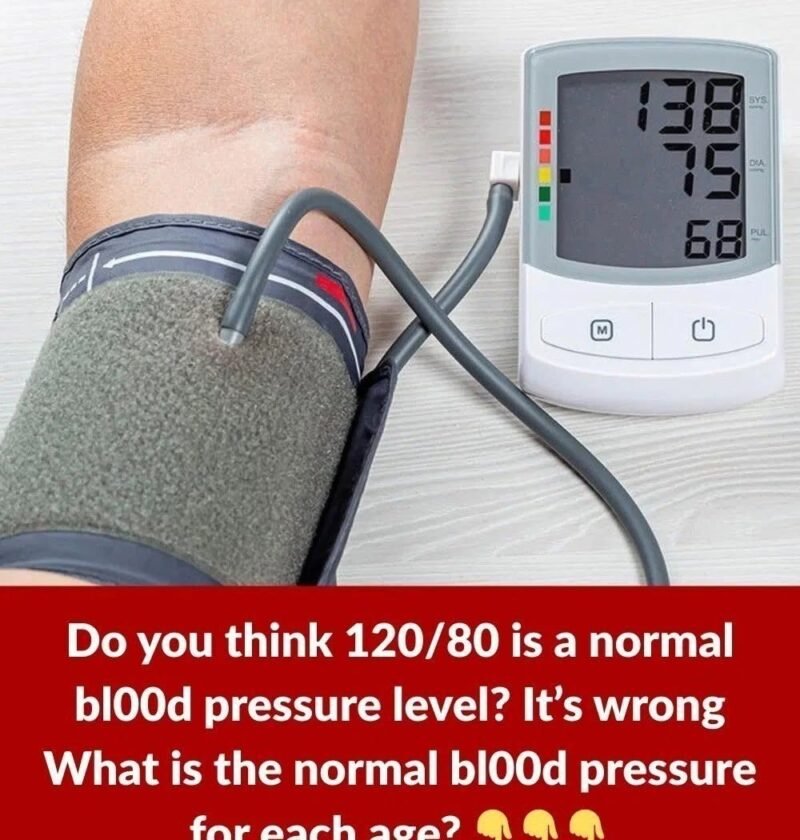
For all adults (ages 18 and older), the medical standard for healthy/normal blood pressure remains under 120/80 mmHg regardless of age.
While average blood pressure naturally tends to gradually increase with age due to arterial stiffening, the clinical target for a normal reading does not change. For infants, children, and teenagers, normal blood pressure varies significantly by age, gender, and height percentiles.
Adult Blood Pressure Standard (Ages 18+)
Under American Heart Association (AHA) and American College of Cardiology (ACC) guidelines, adult blood pressure falls into these standard categories:
| Category | Systolic (Top Number) | Diastolic (Bottom Number) | |
| Normal | Less than 120 mmHg | AND | Less than 80 mmHg |
| Elevated | 120 – 129 mmHg | AND | Less than 80 mmHg |
| Hypertension Stage 1 | 130 – 139 mmHg | OR | 80 – 89 mmHg |
| Hypertension Stage 2 | 140 mmHg or higher | OR | 90 mmHg or higher |
| Hypertensive Crisis | Higher than 180 mmHg | AND/OR | Higher than 120 mmHg |
Average Adult Blood Pressure Readings by Age & Gender
While the healthy goal is always <120/80 mmHg, population averages shift over time:
| Age Group | Men (Average) | Women (Average) |
| 18–24 years | 117/72 mmHg | 110/68 mmHg |
| 25–29 years | 119/74 mmHg | 112/70 mmHg |
| 30–39 years | 122/76 mmHg | 116/72 mmHg |
| 40–49 years | 126/80 mmHg | 122/76 mmHg |
| 50–59 years | 131/82 mmHg | 128/80 mmHg |
| 60–69 years | 135/78 mmHg | 134/78 mmHg |
| 70–79 years | 138/74 mmHg | 139/74 mmHg |
| 80+ years | 142/72 mmHg | 143/72 mmHg |
Normal Ranges for Children & Adolescents (Ages 0–17)
For pediatric populations, normal ranges scale up gradually as children grow:
| Age Group | Systolic (mmHg) | Diastolic (mmHg) |
| Newborns (0–1 month) | 60 – 90 | 20 – 60 |
| Infants (1–12 months) | 87 – 105 | 53 – 66 |
| Toddlers (1–3 years) | 95 – 105 | 53 – 66 |
| Preschoolers (3–5 years) | 95 – 110 | 56 – 70 |
| School-Age (6–13 years) | 97 – 112 | 57 – 71 |
| Adolescents (14–17 years) | 110 – 120 | 65 – 80 |
Key Takeaways
-
The Myth of “Higher BP is Fine with Age”: Older guidelines allowed higher thresholds for seniors, but current research shows maintaining BP under 120/80 mmHg significantly reduces cardiovascular risk at any age.
-
Pediatric Assessment: Pediatricians use growth charts (age, gender, and height percentiles) rather than a single fixed cutoff to evaluate pediatric blood pressure.
-
Individual Targets: Older adults or individuals with existing health conditions (such as kidney disease or frailty) may be assigned personalized targets by their healthcare provider.