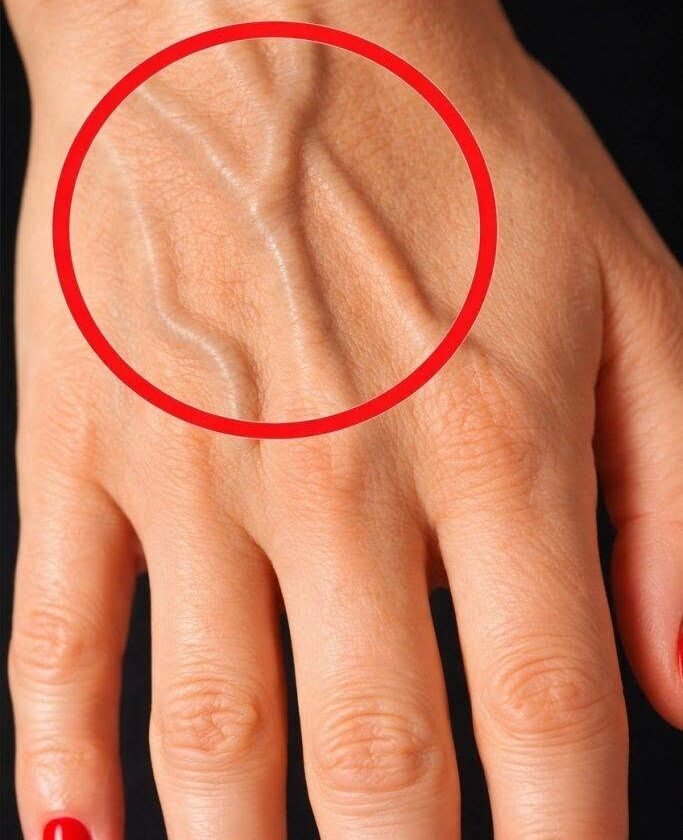
That phrase—“If your veins are visible, it means you are…”—is another piece of clickbait designed to make you click, often leading to a slideshow or an oversimplified claim about aging, weight, or fitness.
In reality, visible veins do not point to just one single definition. How prominent your veins look depends on a combination of biology, lifestyle, and environment.
What Visible Veins Actually Mean
Depending on where the veins are showing and how they look, prominence can indicate several normal factors—or occasionally, underlying medical considerations:
-
Low Body Fat or High Muscle Mass:
-
What it means: If your veins are prominent on your arms, hands, or legs, it often means you have a lower percentage of subcutaneous fat (the fat layer just beneath the skin) or well-developed muscles that push veins closer to the surface.
-
-
Natural Aging and Thinning Skin:
-
What it means: As we age, the skin naturally loses collagen, elasticity, and subcutaneous fat. This thinning effect makes underlying blood vessels much easier to see, particularly on the hands and arms.
-
-
Genetics and Fair Skin Tones:
-
What it means: Genetics play a massive role in how thick your vein walls are and how they run. Additionally, people with lighter skin complexions naturally show blue or green-tinted veins much more clearly than those with darker skin tones.
-
-
Temporary Factors (Heat, Exercise, or Hydration):
-
What it means: During exercise, your blood pressure rises and blood flow increases, causing veins to dilate and push outward. Hot weather causes blood vessels to expand near the skin’s surface to help cool the body down.
-
-
Venous Pressure or Varicose Veins (When in the Legs):
-
What it means: If the veins in your legs are bulging, twisted, or rope-like, it can mean the tiny one-way valves inside the veins have weakened, causing blood to pool (known as varicose veins or chronic venous insufficiency). This is often influenced by prolonged standing, pregnancy, or family history.
-
When to Pay Closer Attention
While seeing veins on your hands, arms, or feet is usually completely normal and harmless, you should consult a doctor or a vein specialist if you notice:
-
Sudden or painful swelling in one leg.
-
Veins that are tender, warm to the touch, or accompanied by skin discoloration.
-
Aching, heavy, or throbbing legs after standing for short periods.
Are you noticing visible veins in a specific area, or wondering how to tell the difference between normal prominent veins and something like varicose veins?