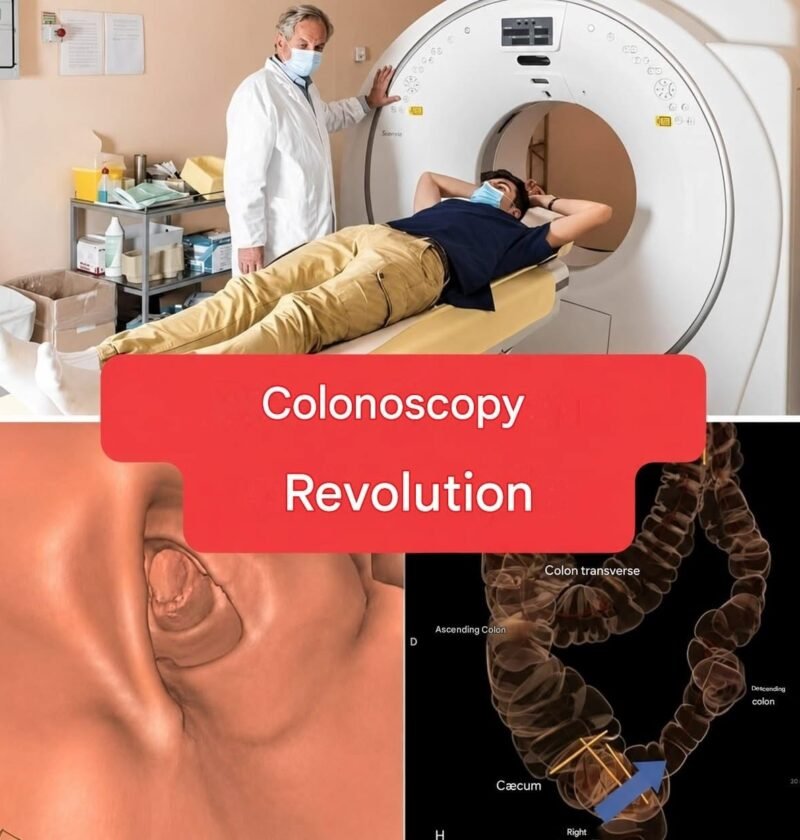
A traditional colonoscopy involves inserting a flexible camera through the rectum to examine the colon. It can detect colorectal cancer, precancerous polyps, and other bowel conditions, and doctors can often remove polyps during the same procedure.
The important distinction: a new technology might make bowel examination less invasive, more comfortable, or easier to perform—but that does not necessarily mean it replaces conventional colonoscopy or offers the same ability to remove polyps and take tissue samples.
What methods are available now?
Uses CT scans to create images of the colon. It is less invasive, but bowel preparation and a small rectal tube are usually still required. Abnormal findings may require conventional colonoscopy.
A person swallows a small camera capsule that captures images as it passes through the digestive tract. It has specific uses, but it cannot remove polyps or take biopsies.
Tests such as FIT look for hidden blood in stool without inserting an instrument into the body. A positive result generally requires follow-up colonoscopy.
The article matching your headline discusses less-invasive technologies, including capsule imaging, rather than establishing that traditional colonoscopy has been replaced.
If you share part 2/2 of the article, I can check the specific new method it describes and whether it is backed by clinical evidence.