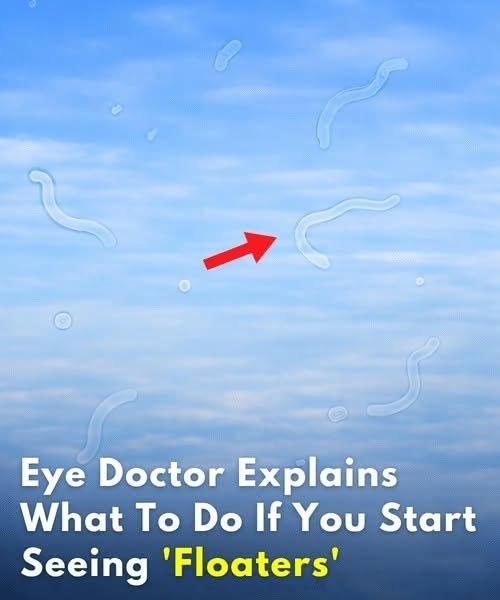
Noticeable spots, squiggly lines, or cobwebs drifting across your vision—known as eye floaters—can be startling the first time you see them. From an eye doctor’s perspective, understanding what is happening inside your eye and knowing when to take action is the best way to protect your vision.
—
### Understanding Eye Floaters: What Are They?
Inside your eye is a clear, gel-like substance called the **vitreous humor**, which helps the eye maintain its round shape. As you age, this gel naturally liquefies, shrinks, and forms tiny microscopic clumps of collagen fibers.
The “floaters” you see are not actually objects in front of you; **they are the shadows these clumps cast onto your retina** (the light-sensitive tissue at the back of your eye). They tend to be most noticeable when you look at a plain, bright background, like a clear blue sky, a white computer screen, or a blank wall.
—
### Step 1: Assess Your Symptoms (Are They Urgent?)
For most people, floaters are a normal, benign part of aging (often associated with a harmless process called *posterior vitreous detachment*, or PVD). However, because the vitreous gel is physically attached to the retina, its shifting can sometimes tug too hard, causing a tear or detachment.
#### 🚨 Seek Immediate Medical Attention (Same-Day Evaluation)
If you experience any of the following “red flag” symptoms, contact an optometrist or ophthalmologist immediately, or go to an emergency eye clinic:
* **A sudden, dramatic increase** in the number of floaters.
* **Flashes of light** (photopsia) appearing in your peripheral vision alongside the floaters.
* **A dark shadow, veil, or “curtain”** creeping across any part of your side or central vision.
* Floaters that appear suddenly following a head injury, eye trauma, or recent eye surgery.
*These symptoms can indicate a retinal tear or detachment, which is a sight-threatening medical emergency requiring prompt intervention.*
—
### Step 2: Schedule a Comprehensive Eye Exam
If your floaters appeared gradually, are stable, and are unaccompanied by flashes or dark curtains, it is still wise to schedule a routine evaluation with an eye doctor.
* **What to expect:** Your doctor will likely perform a **dilated eye exam**. By using special drops to widen your pupils, they can safely look through the lens to inspect the health of your vitreous and retina.
* **The diagnosis:** If the exam reveals a simple age-related change with a healthy retina, no treatment is necessary.
—
### Step 3: Managing Benign Floaters
If your eye doctor confirms that your floaters are harmless, the general recommendation is **patience and observation**.
* **The brain adapts:** Over weeks and months, your brain naturally learns to “filter out” or ignore the shadows, and the floaters often drift out of your direct line of sight.
* **Avoid over-focusing:** Constantly scanning your eyes back and forth to look for floaters will only make them more apparent to your awareness.
#### Are treatments available for harmless floaters?
While medical procedures exist for floaters, eye doctors generally advise against them for typical, aging-related floaters because the risks often outweigh the benefits:
1. **Vitrectomy:** A surgical procedure where the vitreous gel (along with the floaters) is removed from the eye and replaced with a saline solution. It carries risks such as infection, bleeding, and cataracts, and is typically reserved for severe, debilitating cases.
2. **Laser Vitreolysis:** A specialized laser is used to break up large floaters into smaller, less noticeable pieces. This procedure is less common, has mixed success rates, and carries potential risks to the retina if misapplied.
### Summary Advice
If you just started seeing floaters, take a deep breath—they are usually just a harmless quirk of aging eyes. However, because you cannot tell the difference between a harmless floater and a dangerous retinal tear on your own, **the safest first step is always to schedule an evaluation with an eye care professional.**