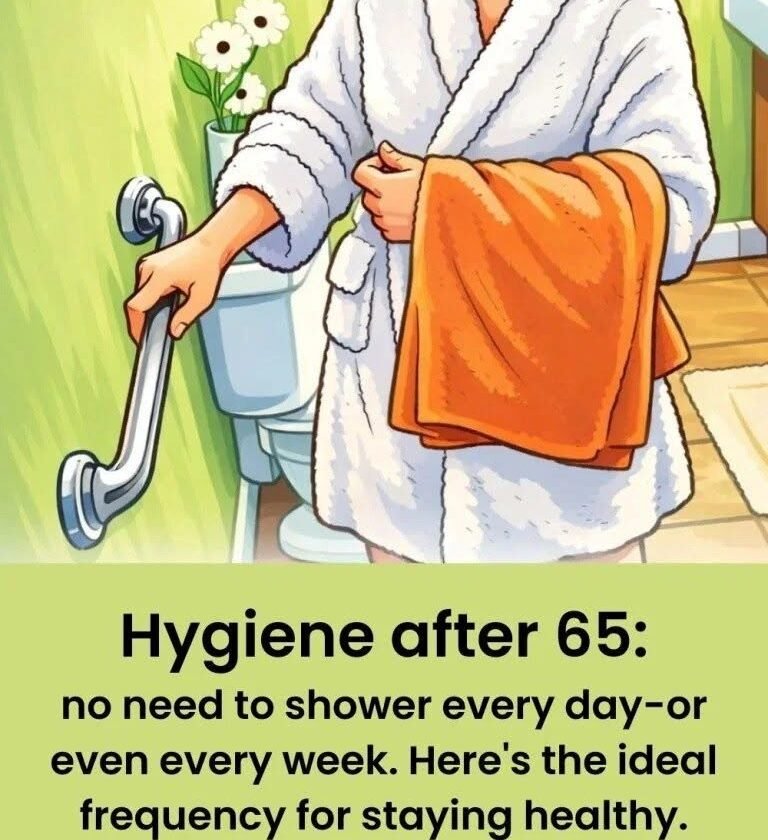
The idea that everyone needs a daily shower is a relatively modern habit driven more by social norms and indoor plumbing than by strict medical necessity. For adults over 65, dermatologists and geriatric experts increasingly suggest that **daily full-body showers can actually do more harm than good.**
Several physiological changes occur in aging skin that make a daily scrubbing routine problematic, along with ways to adjust for healthier skin.
—
### Why Daily Showers Can Harm Aging Skin
1. **Loss of Natural Oils (Sebum):**
As people age, sebaceous (oil-producing) glands slow down significantly. Younger skin can quickly replenish its natural lipid barrier, but older skin produces far less oil. Daily washing strips away what little moisture remains.
2. **A Thinner Skin Barrier:**
The outer layer of the skin thins and loses collagen over time, making it less capable of retaining moisture or protecting against external irritants.
3. **Prone to Itching, Cracking, and Infection:**
When daily hot water and harsh soaps strip away the skin’s protective barrier, it results in chronic dryness, tightness, flakiness, and severe itching (a condition sometimes called *asteatotic eczema* or winter itch). Tiny, microscopic cracks can form in dry skin, creating an entry point for bacteria and increasing the risk of skin infections.
—
### What Do Experts Recommend Instead?
Most healthy adults over 65 **do not need a full-body shower every day**.
* **Frequency:** Many dermatologists and organizations (like the National Institute on Aging) suggest that a full shower or bath **2 to 3 times a week** is plenty for maintaining proper hygiene, provided a person isn’t heavily sweating or doing strenuous physical work.
* **”Targeted” Washing (Sponge Baths):** On the days in between full showers, a quick daily sponge bath focusing on key areas—the face, armpits, groin, feet, and skin folds—is more than enough to manage body odor and bacteria without over-drying the rest of the body.
—
### Best Practices for Healthy Aging Skin
If and when you do shower, modifying *how* you do it is just as important as how often:
* **Lower the Temperature:** Hot water feels relaxing, but it dissolves natural skin lipids rapidly. Use lukewarm water instead.
* **Keep It Short:** Limit showers to 5–10 minutes. Prolonged exposure to water actually dehydrates the skin.
* **Skip Harsh Soaps:** Traditional bar soaps and heavily fragranced body washes are too stripping. Opt for gentle, fragrance-free cleansers, syndet bars, or cleansing oils. Avoid aggressive scrubbing with loofahs or rough washcloths.
* **Moisturize Immediately:** Apply a thick, fragrance-free cream or ointment (rather than a watery lotion) immediately after drying off. Doing this while the skin is still slightly damp traps the moisture inside.
*Note: If you have specific medical conditions like incontinence, high activity/sweating levels, or diagnosed dermatological issues, your hygiene routine may need to be tailored with your doctor.*