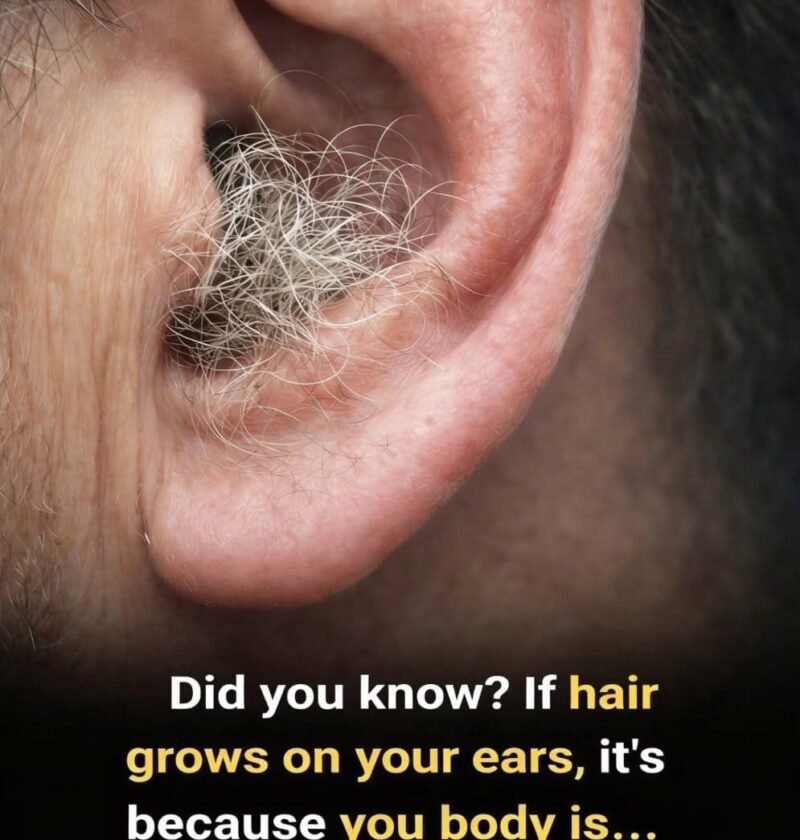
While noticing thicker, wirier hairs sprouting from your ears can be surprising—or even a bit comical—it is a remarkably common part of getting older. Medically known as *auricular hypertrichosis*, ear hair is usually just a harmless quirk of genetics and biology. However, medical professionals and clinical researchers look at changes in body hair as subtle clues about what is happening beneath the surface.
Here is what doctors and dermatologists want you to know about ear hair, what it actually signifies, and when it warrants a closer look:
—
### Why Does Ear Hair Grow in the First Place?
Most ear hair falls into two categories: **vellus hair** (the fine, nearly invisible “peach fuzz” covering much of the body) and **terminal hair** (the darker, coarser hairs that grow near the ear canal or on the tragus).
* **The Aging and Genetic Clock:** Just like nose hair and eyebrow hair, the hair follicles in your ears change over time. Driven largely by genetics, follicles can shift from producing fine vellus hair to thick terminal hair as you age—which is why prominent ear hair is much more common in men post-midlife.
* **Hormonal Sensitivity:** Androgens (like testosterone) play a major role in governing body hair distribution. Over time, ear hair follicles can become increasingly sensitive to normal circulating hormones, stimulating new or heavier growth.
—
### The Medical Myth vs. Reality: Does It Mean Heart Trouble?
You may have heard sensationalized headlines or old medical theories linking heavy ear hair to coronary artery disease or heart attacks.
* **The Origin:** Decades ago, some researchers noticed an interesting correlation between older men with diagonal earlobe creases (known as *Frank’s sign*), excess ear hair, and an increased incidence of heart disease.
* **The Modern Consensus:** Cardiologists emphasize that **ear hair alone is not a reliable diagnostic tool for heart disease**. While both ear hair growth and certain cardiovascular risks increase with age, having ear hair does not mean you have a hidden heart condition. The correlation is largely tied to shared demographic factors (like age and male hormone profiles) rather than a direct cause-and-effect link.
—
### When Should You Actually Pay Attention to Ear Hair?
For the vast majority of people, ear hair is strictly a cosmetic detail that actually serves a biological purpose—working alongside earwax to trap dust, debris, and foreign particles before they reach the eardrum.
However, doctors recommend consulting a healthcare provider if you notice:
1. **Sudden, Rapid Changes:** A drastic, overnight increase in coarse hair growth—especially if accompanied by other symptoms like unexpected hormonal shifts, skin changes, or rapid hair thinning elsewhere—can occasionally point to underlying endocrine or metabolic adjustments.
2. **Physical Discomfort or Blockages:** Excessively dense terminal hair can sometimes crowd the ear canal, trapping water (leading to irritation or swimmer’s ear) or trapping earwax and interfering with hearing aids.
—
### Safe Grooming Tips
If your ear hair bothers you aesthetically, it is easy to manage safely:
* **Use an electric trimmer** designed specifically for nose and ear hair, which safely clips the hair without nicking the delicate skin of the ear.
* **Avoid deep plucking or harsh chemical hair removers** inside the sensitive ear canal, as these can easily cause painful ingrown hairs, folliculitis, or localized infections.
Are you noticing any sudden changes in hair growth or other symptoms that prompted you to look into this?