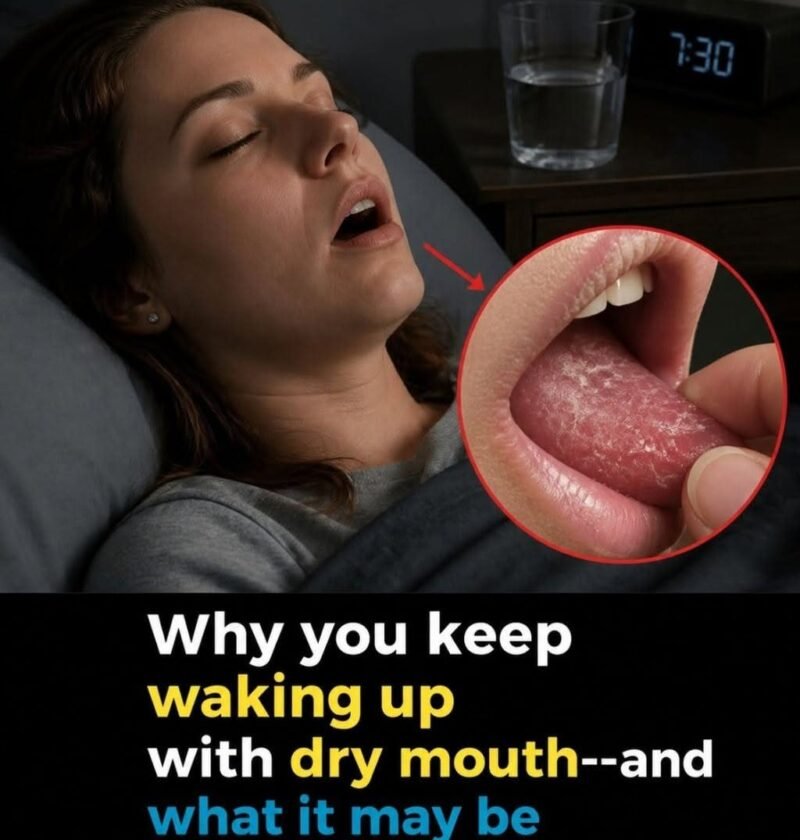
Waking up with a parched, sticky mouth is a surprisingly common experience. While it often means you simply need a glass of water, your body can sometimes use morning dry mouth to signal other habits, environmental factors, or health shifts.
The most common reasons your body might be sending this message include:
* **Nighttime Mouth Breathing:** This is a primary culprit. If you have a stuffy nose, allergies, a deviated septum, or a habit of snoring, you are likely breathing through your mouth while you sleep, which rapidly evaporates your saliva.
* **Obstructive Sleep Apnea (OSA):** Chronic dry mouth—especially when paired with morning headaches, daytime fatigue, or loud snoring—can be linked to sleep apnea, a condition where breathing repeatedly stops and starts through the night, forcing open-mouth breathing.
* **Medication Side Effects:** Hundreds of prescription and over-the-counter medications (including antihistamines, decongestants, antidepressants, blood pressure drugs, and muscle relaxants) list dry mouth as a primary side effect because they interfere with saliva production.
* **Dehydration or Evening Habits:** Not drinking enough fluids throughout the day, or consuming alcohol, caffeine, or salty foods late in the evening, can deplete your body’s hydration levels and significantly reduce saliva flow overnight.
* **Dry Indoor Air:** Sleeping in a bedroom with forced-air heating, air conditioning, or a fan blowing directly on you can dry out the ambient air and pull moisture right out of your mouth and lips while you sleep.
* **Underlying Health Conditions:** Persistent dry mouth (clinically called *xerostomia*) can occasionally point to systemic issues like poorly managed diabetes or autoimmune conditions like Sjögren’s syndrome.
### Simple Ways to Find Relief
* **Use a humidifier:** Running a cool-mist humidifier in your bedroom adds moisture back into the air.
* **Hydrate smartly:** Keep water by your bed, but try to avoid heavy alcohol or caffeine close to bedtime.
* **Clear your airways:** Address nasal congestion with saline sprays or allergy treatments to encourage nose breathing.
Does the dry mouth happen every morning, or does it seem to coincide with certain habits like taking medication or a stuffy nose?