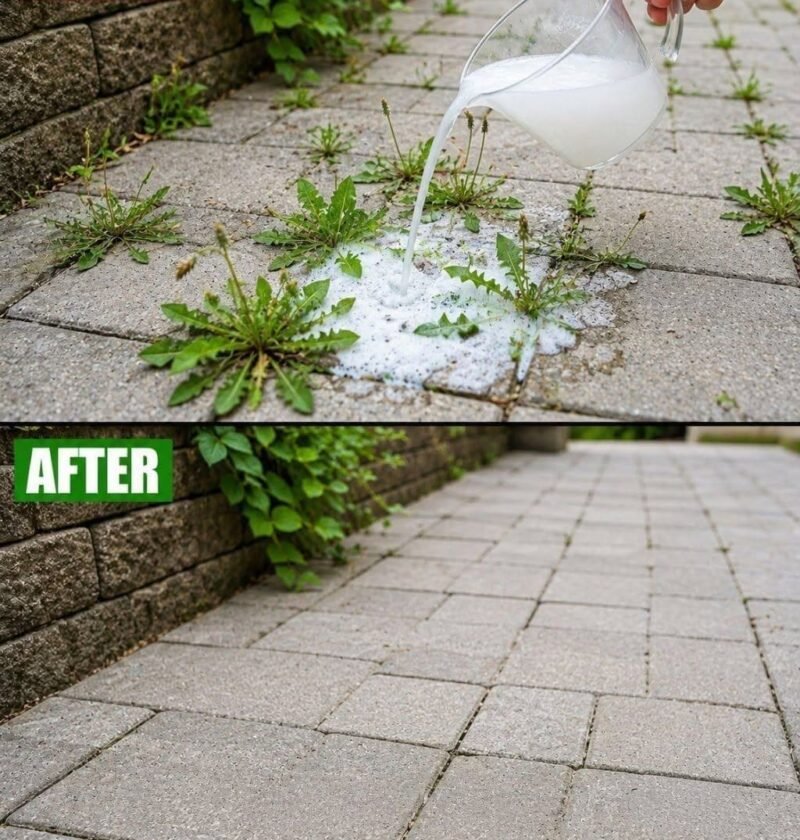
Yes, homemade weed killers can work, but their effectiveness depends heavily on what kind of weeds you are targeting, their age, and your expectations.
While they won’t magically eliminate deep-rooted perennial weeds forever, they are fantastic, chemical-free tools for tackling weeds in cracks on patios, driveways, sidewalks, and small garden beds.
Popular Homemade Weed Killer Recipes
-
The Classic Vinegar & Dish Soap Spray:
-
Recipe: 1 gallon of white vinegar, 1 cup of regular table salt, and 1 teaspoon of liquid dish soap.
-
How it works: Vinegar (especially industrial-strength or 5% household white vinegar) acts as a natural acid that strips away the waxy outer layer of the weed, causing it to dehydrate. The dish soap acts as a “surfactant,” helping the liquid stick to the leaves rather than just rolling off. Salt further dries out the plant and disrupts its moisture balance.
-
-
Boiling Water:
-
Recipe: Straight from the kettle.
-
How it works: Thermal shock! Pouring boiling water directly over weeds (especially annual weeds or those growing in driveway cracks) scalds the foliage and cooks the shallow roots instantly.
-
The Pros and Cons
Pros
-
Eco-Friendly: Safe for children, pets (once dry), and local wildlife compared to heavy commercial synthetic herbicides like glyphosate.
-
Inexpensive: Made from common, everyday pantry items.
-
Great for Hardscapes: Highly effective for clearing weeds out of brick pavers, gravel paths, and concrete cracks where pulling them by hand is difficult.
Cons
-
Non-Selective: Homemade weed killers are indiscriminate killers. If your spray drifts onto your favorite flowers, lawn grass, or vegetables, it will damage or kill them just as quickly.
-
Surface-Level Action: Most DIY sprays kill the top growth they touch, but they often fail to reach deep taproots (like dandelions or thistles). As a result, the weed may bounce back a few weeks later.
-
Soil Damage from Salt: Adding salt to your mixture can sterilize the soil, preventing anything from growing there for a long time. Tip: Skip the salt if you are spraying garden beds where you want to plant later.
Best Practices for Maximum Effectiveness
-
Spray on a Sunny, Hot Day: Sunlight accelerates the dehydration process. Spraying in the morning of a hot, dry day yields much better results than spraying on a cool or rainy day.
-
Target Young Weeds: DIY killers struggle against mature, established weeds with massive root systems. They work best on young seedlings.
-
Use a Pump Sprayer: Apply the mixture directly onto the leaves using a targeted stream rather than a wide mist to avoid accidentally hitting surrounding plants.
Would you like tips on how to prevent weeds from sprouting in your garden in the first place?