An important medical distinction helps clarify blood pressure: what is typical for an age group is not always what is ideal or healthy.
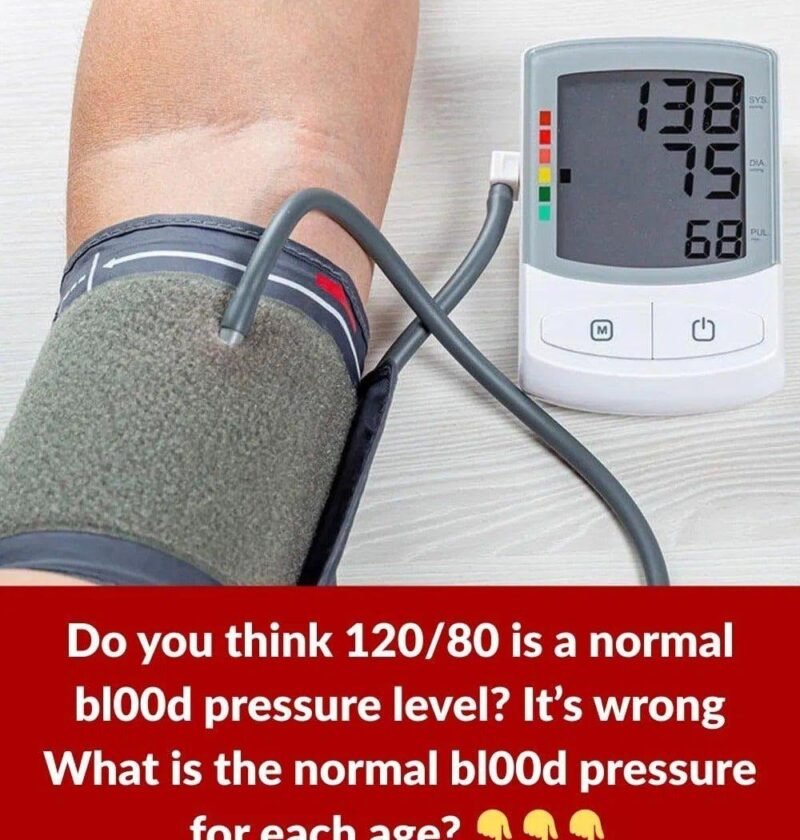
According to major cardiovascular guidelines (such as the American Heart Association), the universal medical target for a normal, healthy adult blood pressure at any age is less than 120/80 mmHg. However, natural changes in artery elasticity mean that population averages tend to drift upward as people get older.
Adult Blood Pressure Categories (Ages 18+)
Regardless of whether you are 20 or 80, adult readings are classified into these standard categories:
| Category | Systolic (Top Number) | Diastolic (Bottom Number) | What it means | |
| Normal | Less than 120 | and | Less than 80 | Ideal heart health |
| Elevated | 120–129 | and | Less than 80 | Needs lifestyle improvements to prevent hypertension |
| Stage 1 Hypertension | 130–139 | or | 80–89 | High blood pressure; requires management |
| Stage 2 Hypertension | 140 or higher | or | 90 or higher | Clearly high blood pressure requiring medical attention |
| Hypertensive Crisis | Higher than 180 | and/or | Higher than 120 | Medical emergency! Seek immediate care. |
Typical Averages vs. Ideal Targets by Age Group
While < 120/80 mmHg remains the universal goal, here is how population averages shift across different life stages (and why “common” doesn’t necessarily mean “risk-free”):
-
Young Adults (Ages 18–39):
-
Typical Average: Roughly 110–120 / 68–78 mmHg
-
Notes: Blood pressures are generally lowest during this phase of life. Catching elevated numbers or a creeping diastolic (bottom) number early can drastically lower lifetime cardiovascular risks.
-
-
Middle Age (Ages 40–59):
-
Typical Average: Roughly 120–130 / 74–82 mmHg
-
Notes: Systolic (top) pressure begins its natural upward climb during these decades as blood vessels slowly lose elasticity. Readings frequently cross into the elevated or Stage 1 range here.
-
-
Older Adults (Ages 60+):
-
Typical Average: Roughly 130–140+ / 68–80 mmHg
-
Notes: While it is statistically common for an older adult’s average to drift into the 130s or 140s, it is still classified as hypertension. Managing high blood pressure in older age continues to provide massive protection against strokes and heart attacks, though doctors sometimes individualize exact targets based on overall frailty or other medical conditions.
-
What About Children and Teens?
Blood pressure standards for children (birth to 18 years) are calculated differently than for adults. Instead of a single fixed number, pediatric normal ranges are determined using age, height, and gender percentiles calculated by a pediatrician. Generally, lower numbers are normal for infants and toddlers, gradually increasing as they grow into adolescence.
Are you tracking a specific blood pressure reading for yourself or a family member, or looking for ways to keep your numbers in a healthy range?