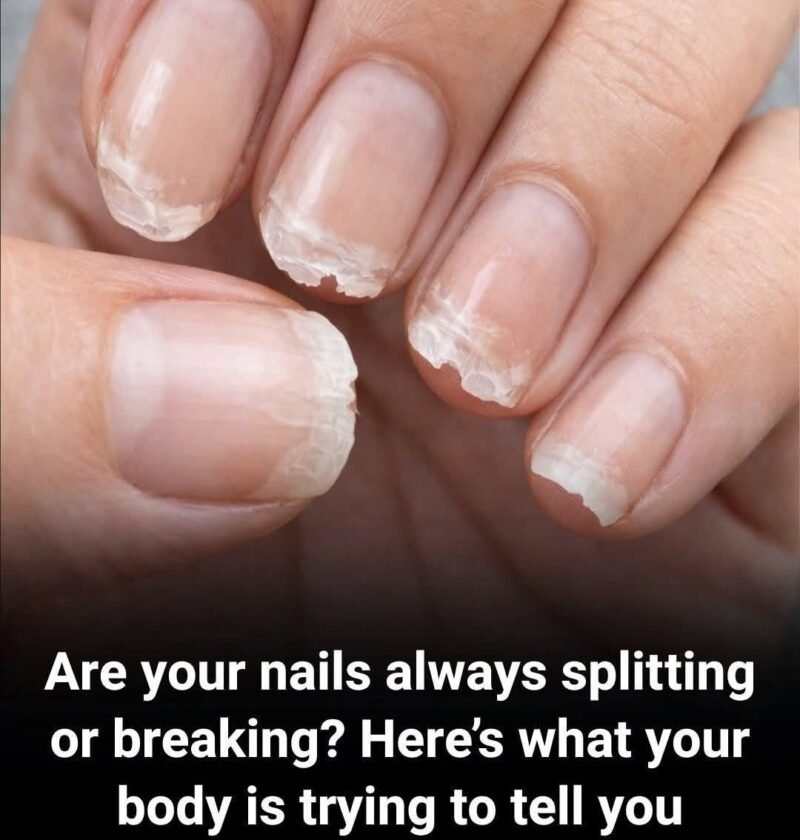
Weak or brittle nails (onychorrhexis) are often viewed as a minor cosmetic issue, but your fingernails act as a window into your general health. Nails are made of layers of a protein called keratin, formed beneath the cuticle at the nail matrix.
When the nail matrix lacks hydration, essential nutrients, or proper blood flow, the keratin layers split, peel, or crack easily.
Direct Clues: Dry vs. Soft Brittle Nails
Before pinpointing internal causes, determine whether your nails are dry and brittle or soft and brittle:
-
Dry and Brittle (Hard, but splits easily): Usually caused by external factors like frequent handwashing, harsh cleansers, dry weather, or low moisture.
-
Soft and Bendable (Peels, weak, tear-prone): Typically stems from overexposure to moisture, chemical damage, or internal nutritional deficiencies.
What Your Body May Be Telling You
1. Iron-Deficiency Anemia
-
The Cause: Iron helps form hemoglobin, which carries oxygen-rich red blood cells to the nail matrix. Low iron starves the nail cells, leading to weak, ridged, or concave (“spoon-shaped” or koilonychia) nails.
-
Other Symptoms: Fatigue, pale skin, cold hands and feet, dizziness.
2. Thyroid Imbalance (Hypothyroidism or Hyperthyroidism)
-
The Cause: The thyroid regulates metabolism, cellular growth, and sweat/sebum secretion.
-
An underactive thyroid (hypothyroidism) slows cell turnover, leading to dry, brittle, slow-growing nails.
-
An overactive thyroid (hyperthyroidism) can cause nails to separate from the nail bed (onycholysis).
-
-
Other Symptoms: Unexplained weight changes, feeling unusually cold or hot, hair thinning, sluggishness.
3. Nutritional Deficiencies
-
Biotin (Vitamin B7): Essential for keratin production. Low levels cause peeling and fine splitting along the edges.
-
Protein & Zinc: Keratin is built from amino acids. Insufficient dietary protein or poor zinc absorption prevents strong nail structure build-up.
-
Calcium & Vitamin D: Low levels weaken the cohesion between keratin layers.
4. Poor Circulation or Aging
-
Aging: As we age, moisture retention in tissues decreases, causing vertical ridges and increased brittleness.
-
Low Blood Flow: Conditions like Raynaud’s phenomenon limit circulation to the fingertips, reducing the nutrients delivered to the nail plate.
5. Environmental & External Overexposure
-
Wet-to-Dry Cycles: Wetting your hands expands the nail cells, and drying shrinks them. Repeated expansion and contraction weaken cellular bonds.
-
Harsh Chemicals: Frequent use of acetone-based polish removers, alcohol sanitizers, and household cleaners strips natural oils from the nail plate.
Action Plan for Stronger Nails
| Focus Area | Solution |
| Hydration & Protection | Wear cotton-lined rubber gloves when washing dishes or using cleaners. Apply cuticles oil or thick hand cream immediately after washing hands. |
| Dietary Support | Increase intake of protein, leafy greens, nuts, seeds, eggs, and legumes. Discuss biotin or iron supplementation with a doctor. |
| Grooming Habits | Avoid acetone removers; opt for non-acetone alternatives. Keep nails trimmed short with a fine-grit file working in one direction (avoid sawing back and forth). |