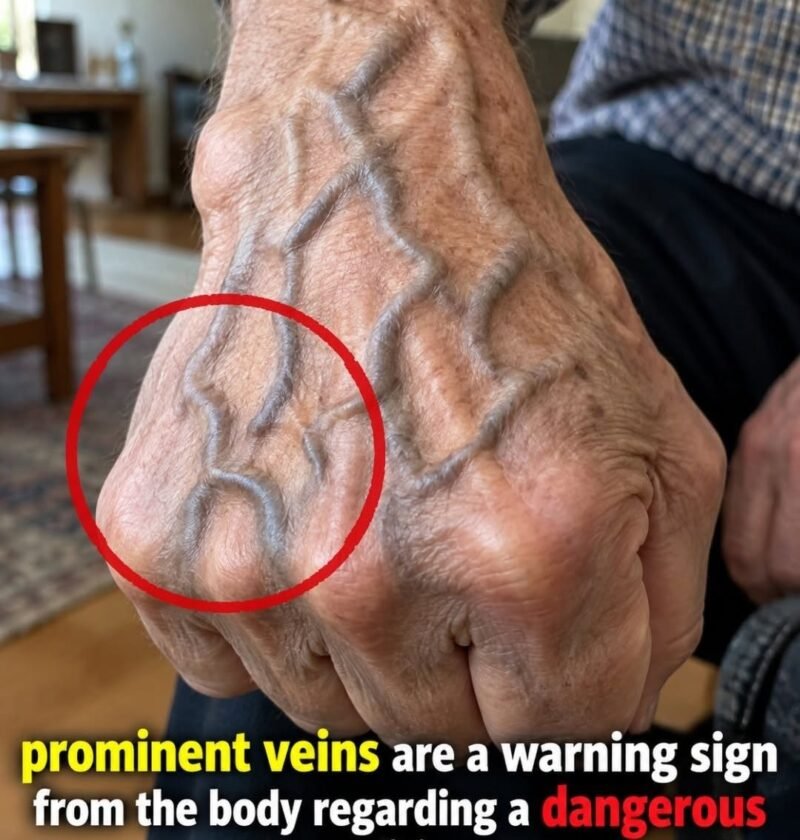
When visible blue veins appear or become more prominent after the age of 60, it is often your vascular system’s way of showing the natural wear and tear of decades against gravity. While completely normal in many cases, prominent veins can also be a sign that your blood flow and vein structures are under stress.
Understanding what is happening beneath the surface can help you distinguish between a harmless cosmetic change and a signal that your circulation needs attention.
—
### What Is Happening Inside Your Veins?
Your veins have a demanding job: they must carry deoxygenated blood back up to your heart, working against the full force of gravity (especially in the legs). To accomplish this, they rely on two main mechanisms that naturally change with age:
* **Elasticity Loss and Thinner Skin:** As you age, your body produces less collagen, causing skin to thin and subcutaneous fat to decrease. This makes underlying veins naturally easier to see. Simultaneously, vein walls lose their youthful elasticity, making them more prone to stretching.
* **Valve Fatigue:** Healthy veins contain tiny, one-way valves that snap shut to keep blood moving upward. After decades of use, these valves can weaken or become “incompetent,” allowing blood to slip backward and pool in the lower vessels. This pooling increases pressure, causing veins to bulge, twist, or darken (forming varicose or spider veins).
* **Reduced Muscle Pump Efficiency:** Muscles—particularly in your calves—act as a secondary pump to push blood upward when you walk or move. Natural age-related declines in muscle mass can make this pump less efficient, leaving more work for the veins.
—
### When Visible Veins Are Harmless vs. When They “Scream” for Help
Not all prominent veins require medical intervention, but certain accompanying signs indicate that your blood flow is struggling.
| **Benign / Normal Signs** | **Signs Your Veins Need Attention** |
| — | — |
| Evenly distributed, mild green or blue veins visible due to thin skin. | Bulging, twisted, cord-like veins (varicose veins). |
| Veins that become slightly more prominent temporarily during exercise or hot weather. | Persistent aching, throbbing, or a heavy, tired feeling in the legs by the end of the day. |
| Minor, non-painful spider veins (thin red or purple web-like lines). | Swelling in the lower legs, ankles, or feet that doesn’t go away with rest. |
| No associated pain, swelling, or skin texture changes. | Skin discoloration, dryness, thickening, or open sores (ulcers) near the ankles. |
—
### Proactive Steps to Support Your Circulation After 60
If your blood flow is sending signals of distress—or if you simply want to protect your vascular health as you age—incorporating these daily habits can make a substantial difference:
* **Keep Moving:** Low-impact exercises like walking, swimming, or cycling engage your calf muscles, acting as a natural pump to drive blood back to your heart.
* **Avoid Prolonged Sitting or Standing:** If you sit or stand for long periods, gravity causes blood to pool. Make it a habit to flex your ankles, stretch, or take a short walk every 30 to 60 minutes.
* **Elevate Your Legs:** Spend 15 to 20 minutes a day resting with your legs elevated above the level of your heart to give your veins a break from gravity.
* **Stay Hydrated:** Drinking plenty of water prevents your blood from becoming overly thick, making it easier for your circulatory system to pump efficiently.
* **Consider Compression Therapy:** If recommended by a physician, wearing supportive compression stockings can gently squeeze your leg tissues and support vein valves.
> **When to Seek Immediate Help:** If a prominent vein suddenly becomes hard, extremely painful, red, or warm to the touch, or if you experience sudden, severe swelling in one leg, seek medical evaluation promptly, as these can be signs of a blood clot (Deep Vein Thrombosis).
Have you noticed any physical discomfort—like aching, heaviness, or swelling—accompanying these visible veins, or is it primarily a visual change?