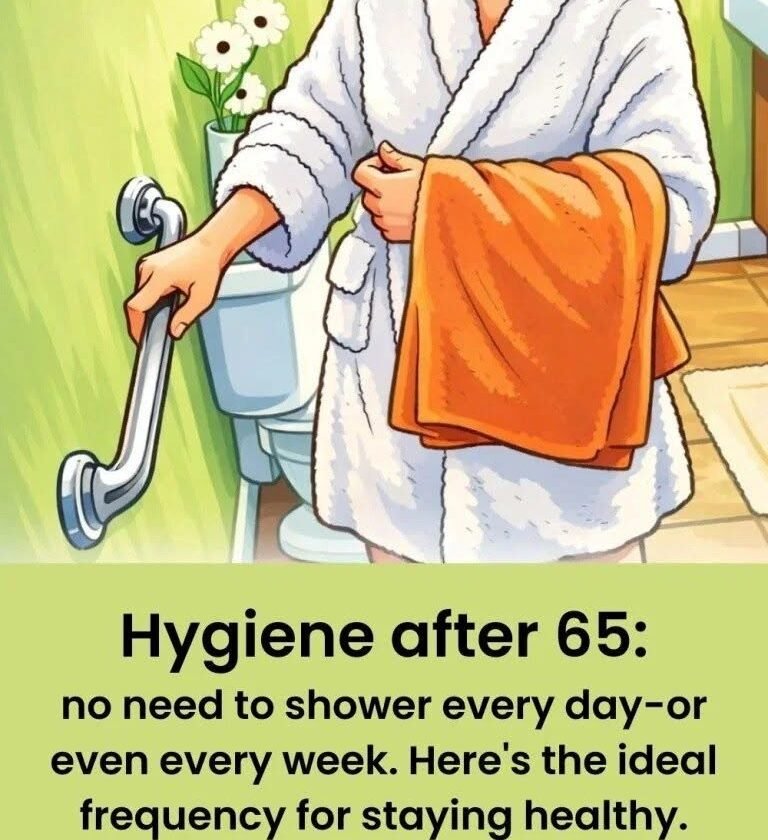
The idea that everyone needs a daily shower is a relatively modern, cultural habit rather than a biological requirement. In fact, dermatologists and aging experts increasingly point out that for adults over 65, daily full-body showers can often do more harm than good.
1. The Biology of Aging Skin
As we age, our skin undergoes fundamental physiological changes:
-
Decreased Oil Production: Sebaceous glands slow down significantly after middle age, producing a fraction of the natural oils (sebum) they used to.
-
A Weaker Skin Barrier: The outer layer of the skin (epidermis) thins, and the skin loses collagen.
-
Poor Moisture Retention: Because of these changes, older skin struggles to hold onto moisture and is far more susceptible to drying out.
2. How Daily Showers Damage the Skin
When you take a daily shower—especially using hot water and traditional soaps—it strips away the minimal natural oils aging skin has left. This leads to a cascade of issues:
-
Severe Dryness and Itching: Over-washing leaves skin feeling tight, rough, flaky, and intensely itchy (a condition sometimes called asteatotic eczema or winter itch).
-
Cracking and Infection Risk: Severely dry skin can develop microscopic cracks. These tiny fissures compromise the skin’s barrier function, creating an entry point for bacteria and increasing the risk of painful skin infections.
-
Increased Fragility: Thinned, fragile skin is also more prone to micro-tears from aggressive scrubbing or harsh towels.
3. What Experts Recommend Instead
Most dermatologists and healthcare providers suggest adjusting hygiene routines to match the needs of mature skin:
-
Fewer Full Showers: For many healthy adults over 65, a full shower 2 to 3 times a week is entirely sufficient for maintaining good hygiene.
-
Targeted Spot-Cleaning (“Sponge Baths”): On the days between full showers, a quick washcloth clean of the areas where bacteria and odor accumulate most—specifically the underarms, groin, face, feet, and skin folds—keeps things fresh without over-washing the rest of the body.
-
Lower the Temperature: Hot water feels luxurious, but it dissolves skin lipids much faster than lukewarm water.
-
Keep It Brief: Short showers (3 to 5 minutes) limit the skin’s exposure to water and drying detergents.
-
Moisturize Immediately: Applying a gentle, fragrance-free cream or ointment right after patting dry (while the skin is still slightly damp) locks in vital moisture.
Note: Of course, these are general guidelines. Individuals who are very physically active, sweat heavily, or manage specific medical conditions (such as incontinence) may require more frequent targeted cleansing.