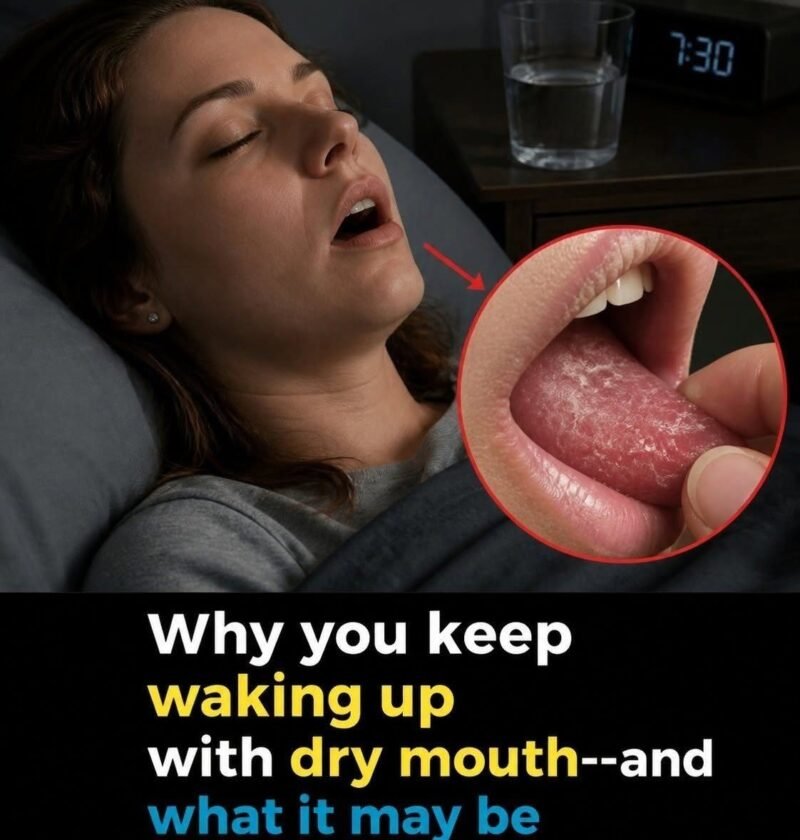
Waking up with a dry, sticky mouth is a very common experience, and while it can occasionally just mean you need a glass of water, regular morning dryness is often your body’s way of signaling one of a few underlying factors:
1. You Are Breathing Through Your Mouth At Night
-
What it means: When you sleep with your mouth open or experience chronic nasal congestion (from allergies, a deviated septum, or a cold), continuous airflow evaporates the saliva in your mouth over several hours.
-
Worth noting: Habitual mouth breathing or severe snoring can also be linked to sleep-disordered breathing or obstructive sleep apnea (OSA).
2. Medication Side Effects
-
What it means: Hundreds of prescription and over-the-counter drugs—especially antihistamines, decongestants, antidepressants, anti-anxiety medications, and blood pressure drugs—reduce the amount of saliva your salivary glands produce. If you take medication right before bed, the effect is often strongest by morning.
3. Mild Dehydration or Evening Habits
-
What it means: Naturally, your body slows down saliva production while you sleep. If you didn’t drink enough fluids during the day, or if you consumed alcohol or caffeine close to bedtime, your overall hydration drops, making morning dryness much more intense.
4. Environmental Factors in Your Bedroom
-
What it means: Sleeping in a room with very dry air—often caused by winter heating, air conditioning, or arid climates—can dry out your mucous membranes overnight.
5. Underlying Health Conditions
-
What it means: Persistent dry mouth (known medically as xerostomia) can occasionally point to systemic issues like poorly managed diabetes, or autoimmune conditions like Sjögren’s syndrome, where the immune system targets moisture-producing glands.
Simple Ways to Find Relief
-
Use a humidifier: Running a cool-mist humidifier in your bedroom can add moisture back into the air and keep your airways from drying out.
-
Sip water before bed: Keep a glass of water on your nightstand for quick hydration if you wake up parched.
-
Review your medications: If you suspect a prescription drug is the culprit, talk to your doctor about adjusting the dosage or the time of day you take it.
-
Prioritize nasal breathing: Addressing nasal congestion with saline rinses or strips can help encourage breathing through your nose rather than your mouth.
Note: Because saliva protects your teeth from decay and bacteria, chronic dry mouth can lead to dental issues over time. If waking up dry is a daily occurrence for you, it’s a good idea to mention it to your dentist or primary care doctor.
Do you notice any other symptoms when you wake up, like chronic snoring, a sore throat, or daytime fatigue?