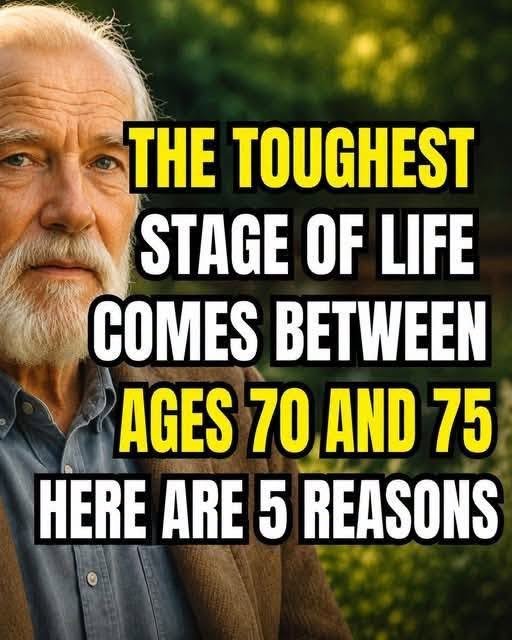
Between 70 and 75, many people experience a unique intersection of physical, emotional, and social transitions. Here are 5 common reasons why this period is often cited as particularly challenging:
1. **The Physical “Gear Shift”**
While the 60s often feel like an extension of middle age, the early 70s are frequently when age-related biological changes become noticeably concrete. Chronic conditions—such as osteoarthritis, cardiovascular changes, or reduced mobility—tend to manifest or require active management, making physical vulnerability harder to ignore.
2. **Loss of the “Safety Net” Peer Group**
This age window is often marked by an accelerating frequency of loss. Friends, siblings, and former colleagues may pass away or face major health crises. Losing the contemporaries who share a lifetime of context can create a distinct form of quiet isolation.
3. **Loss of Primary Roles and Identity Shift**
By 70–75, most people have fully transitioned out of long-term careers, and children are often deep into their own mid-life or caring for their own families. Finding a renewed sense of purpose outside of professional titles or active daily parenting requires significant psychological adaptation.
4. **Navigating the Loss of Independence**
This period often presents the first real compromises to personal autonomy—such as downscaling a home, giving up night driving, or relying on others for daily tasks. The shift from provider/helper to receiver of help can be emotionally heavy.
5. **Cognitive and Mortality Awareness**
Noticing subtle shifts in memory or processing speed—whether normal aging or early decline—can trigger existential anxiety. Confronting the reality of a finite remaining timeline often forces a major reflection on life accomplishments, regrets, and legacy.
—
Despite these hurdles, research also highlights that this phase can bring high levels of emotional resilience, wisdom, and selective deep relationships once these initial transitions are navigated.