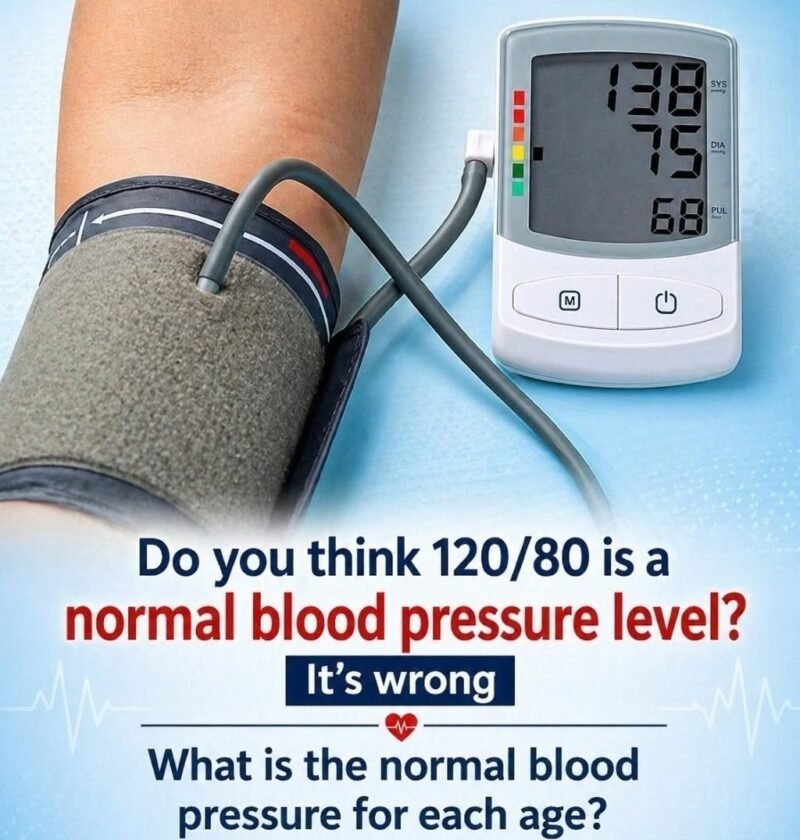
For adults, medical guidelines emphasize that the **ideal normal blood pressure is less than 120/80 mmHg** across all adult age groups.
While it is true that average blood pressure tends to naturally increase as people get older due to the stiffening of arteries, a higher average does not mean a higher reading is “healthy” or safe.
—
### Adult Blood Pressure Categories
Medical standards (such as the American Heart Association guidelines) classify adult blood pressure into these tiers:
| Category | Systolic (Top Number) | | Diastolic (Bottom Number) |
| — | — | — | — |
| **Normal** | Less than 120 | **and** | Less than 80 |
| **Elevated** | 120 to 129 | **and** | Less than 80 |
| **Stage 1 Hypertension** | 130 to 139 | **or** | 80 to 89 |
| **Stage 2 Hypertension** | 140 or higher | **or** | 90 or higher |
| **Hypertensive Crisis** | Higher than 180 | **and/or** | Higher than 120 |
—
### Average Readings by Age and Gender
Although the **clinical goal** remains below 120/80 mmHg for everyone, large health population studies show how averages typically drift upward over time:
* **18 to 39 Years:**
* *Women:* ~110/68 mmHg
* *Men:* ~119/70 mmHg
* **40 to 59 Years:**
* *Women:* ~122/74 mmHg
* *Men:* ~124/77 mmHg
* **60 Years and Older:**
* *Women:* ~139/68 mmHg (averages often rise after menopause due to hormonal shifts)
* *Men:* ~133/69 mmHg
—
### Blood Pressure in Children and Teens
Unlike adults, normal blood pressure for children (birth to 18 years) **does** change based on age, height, and gender. Pediatric charts use percentiles rather than a single flat number:
* **Newborns:** Typically range around 60–90 / 20–60 mmHg.
* **Children (Ages 6–13):** Average ranges span roughly 85–110 mmHg systolic and 55–70 mmHg diastolic.
* **Adolescents (Ages 14–18):** Typically range around 110–120 / 65–80 mmHg. Readings consistently over 130/80 mmHg in teens are generally flagged as high.
*Note: A single high reading doesn’t automatically mean you have hypertension, as stress, caffeine, or rushing can temporarily spike numbers. However, consistently tracking readings helps catch trends early. Are you looking into this for a specific age group or trying to interpret a recent reading?*