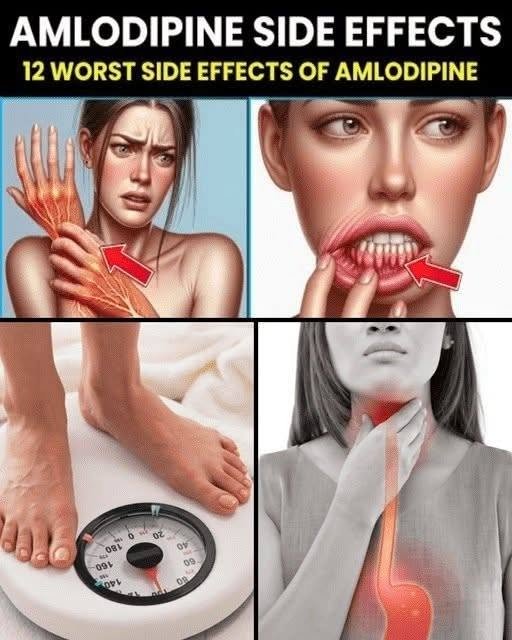
Amlodipine is a widely prescribed calcium channel blocker used to manage high blood pressure and coronary artery disease. While it is generally well-tolerated, it can cause a range of side effects—some of which are mild, while others require prompt medical evaluation.
Here are 12 noteworthy side effects of amlodipine, ranging from common physical changes to critical warning signs that should never be ignored.
## Common or Noticeable Side Effects
-
Peripheral Edema (Swelling in the Legs, Ankles, and Feet)This is the most frequent side effect. Because amlodipine relaxes and widens blood vessels, fluid can leak into the surrounding tissues—particularly in the lower extremities due to gravity. While usually non-emergency, severe or painful swelling should be evaluated.
-
Dizziness or LightheadednessAs your blood pressure drops, you may experience mild dizziness, especially when standing up too quickly (orthostatic hypotension). Moving slowly when changing positions usually helps.
-
Flushing (Warmth or Redness in the Face/Neck)The widening of blood vessels can cause sudden feelings of warmth, redness, or flushing in the face, neck, or upper chest. This often lessens over time as your body adjusts.
-
Heart PalpitationsSome people feel a pounding, fluttering, or unusually fast heartbeat. While sometimes mild, a racing or irregular heartbeat should be monitored closely.
-
Fatigue and DrowsinessFeeling unusually tired, low on energy, or sleepy can happen, particularly during the first few weeks of starting the medication or following a dose increase.
-
Nausea and Mild Stomach DiscomfortQueasiness, abdominal discomfort, or general stomach upset can occasionally occur. Taking the medication with food can sometimes help minimize this.
-
Gum Overgrowth (Gingival Hyperplasia)A less common long-term side effect where gum tissue becomes tender, swollen, bleeds easily, or slowly grows over the teeth. Good dental hygiene helps mitigate this risk.
## Critical Warning Signs You Should NEVER Ignore
If you experience any of the following serious side effects, contact a healthcare professional or seek emergency medical care immediately:
-
Severe or Worsening Chest Pain (Angina) / Heart Attack RiskWhile amlodipine is used to treat chest pain, starting the medication or increasing the dose can paradoxically trigger or worsen angina or precipitate a heart attack in rare cases. Seek emergency care for new or crushing chest pressure, pain spreading to the jaw or arm, and cold sweats.
-
Severely Low Blood Pressure (Hypotension)If your blood pressure drops too low, you may experience extreme dizziness, confusion, clammy skin, weakness, or fainting.
-
Shortness of Breath or Fluid AccumulationPersistent shortness of breath, a worsening cough, or sudden breathing difficulty can indicate fluid buildup or underlying cardiac stress.
-
Signs of Liver Problems (Hepatitis or Jaundice)Yellowing of the skin or the whites of the eyes, dark urine, upper-right stomach pain, and unexplained nausea or fatigue can signal liver dysfunction.
-
Severe Allergic ReactionsSeek immediate emergency assistance if you develop signs of a severe allergic reaction, such as swelling of the face, lips, tongue, or throat, trouble breathing, or widespread blistering, peeling skin rashes.
Medical Disclaimer: Never stop taking or alter the dose of your blood pressure medication without consulting your prescribing physician first. Abruptly stopping amlodipine can lead to a dangerous rebound spike in blood pressure.
Are you or a loved one currently taking amlodipine, and are you experiencing any specific side effects right now?